


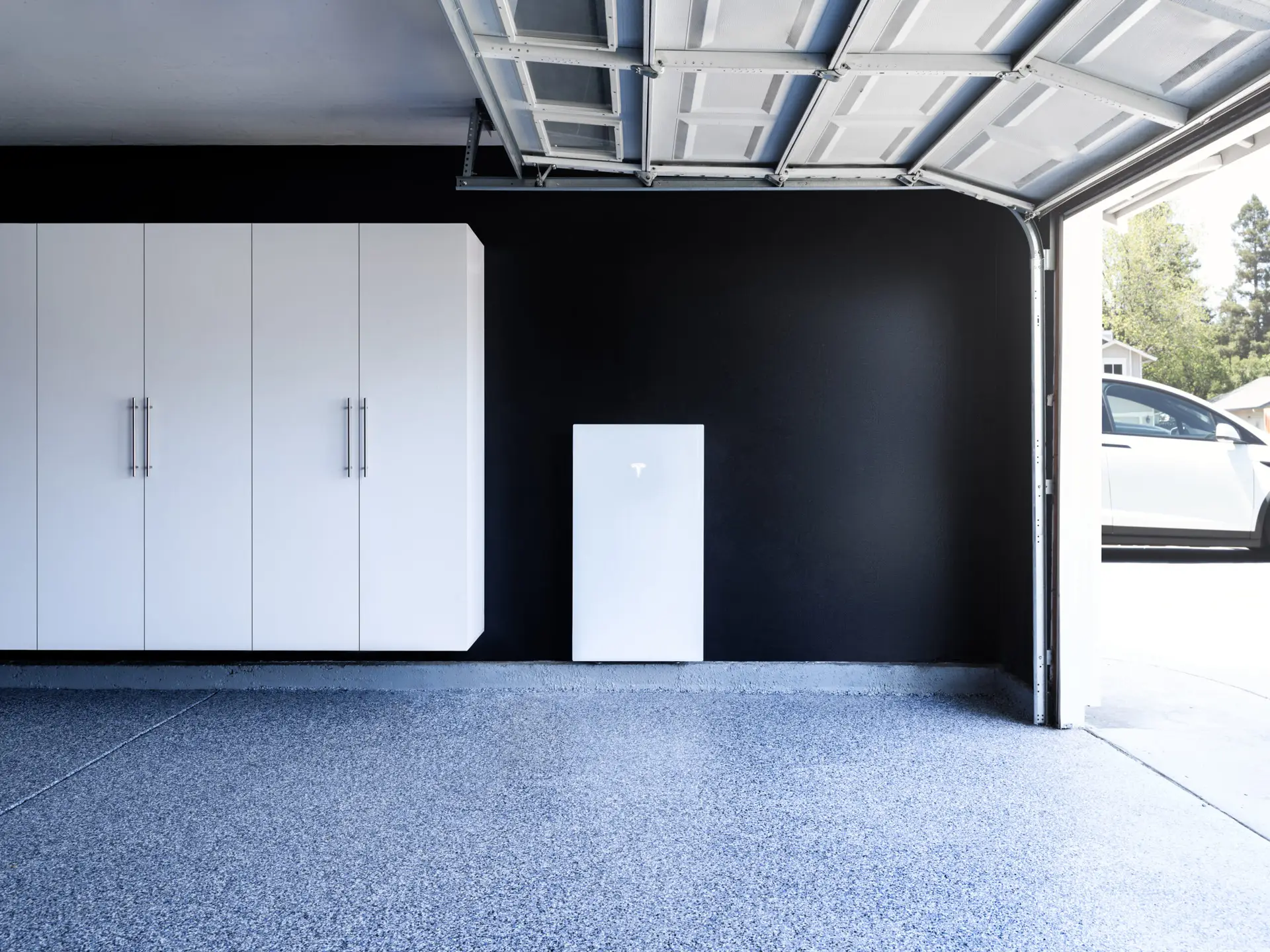
Home battery storage in North County San Diego.
Under NEM 3.0, a battery is not an add-on. It is how solar pays back. We are Tesla Certified Powerwall 3 installers serving North County San Diego, and we will tell you exactly what a system will do for your home before you sign anything.
Under NEM 3.0, solar without a battery is a weaker investment.
Before 2023, SDG&E paid close to retail rates for energy you sent back to the grid. Under NEM 3.0, that export rate dropped sharply, in many cases to 4 to 8 cents per kWh. Meanwhile, you still buy power back at night for 45.7 cents per kWh or more.
A battery changes the equation. Instead of exporting cheap and importing expensive, you store what your panels produce in the afternoon and use it in the evening when rates are highest. That time-shifting is where the financial return lives under the new rules. For most new solar buyers in San Diego, a Powerwall 3 is not optional. It is how the system works the way you expect it to.
The NEM 3.0 math
4–8¢
Export rate (sell)
What SDG&E pays you
45.7¢+
Import rate (buy)
What you pay at night
A battery stores your solar production at cost instead of exporting it at a loss.
PSPS outages are a North County reality
SDG&E issues Public Safety Power Shutoffs during high fire-risk weather, sometimes for multiple days. Solar panels alone do not keep your lights on when the grid is down. A Powerwall switches your home to battery power in under 20 milliseconds. As long as the sun comes up, your battery recharges and you stay powered.
Self-consumption over export
The core strategy under NEM 3.0 is to use as much of your own solar production as possible. A battery extends your self-consumption window from daytime into the evening and night. Combined with SDG&E's time-of-use rate structure, that shift turns what used to be low-value exports into high-value savings.
Faster payback than solar alone
Adding a Powerwall shortens the effective payback period of a solar system under NEM 3.0 by increasing the value of every kWh produced. Systems designed for self-consumption from the start outperform solar-only designs that rely on grid exports for return.
Certified by
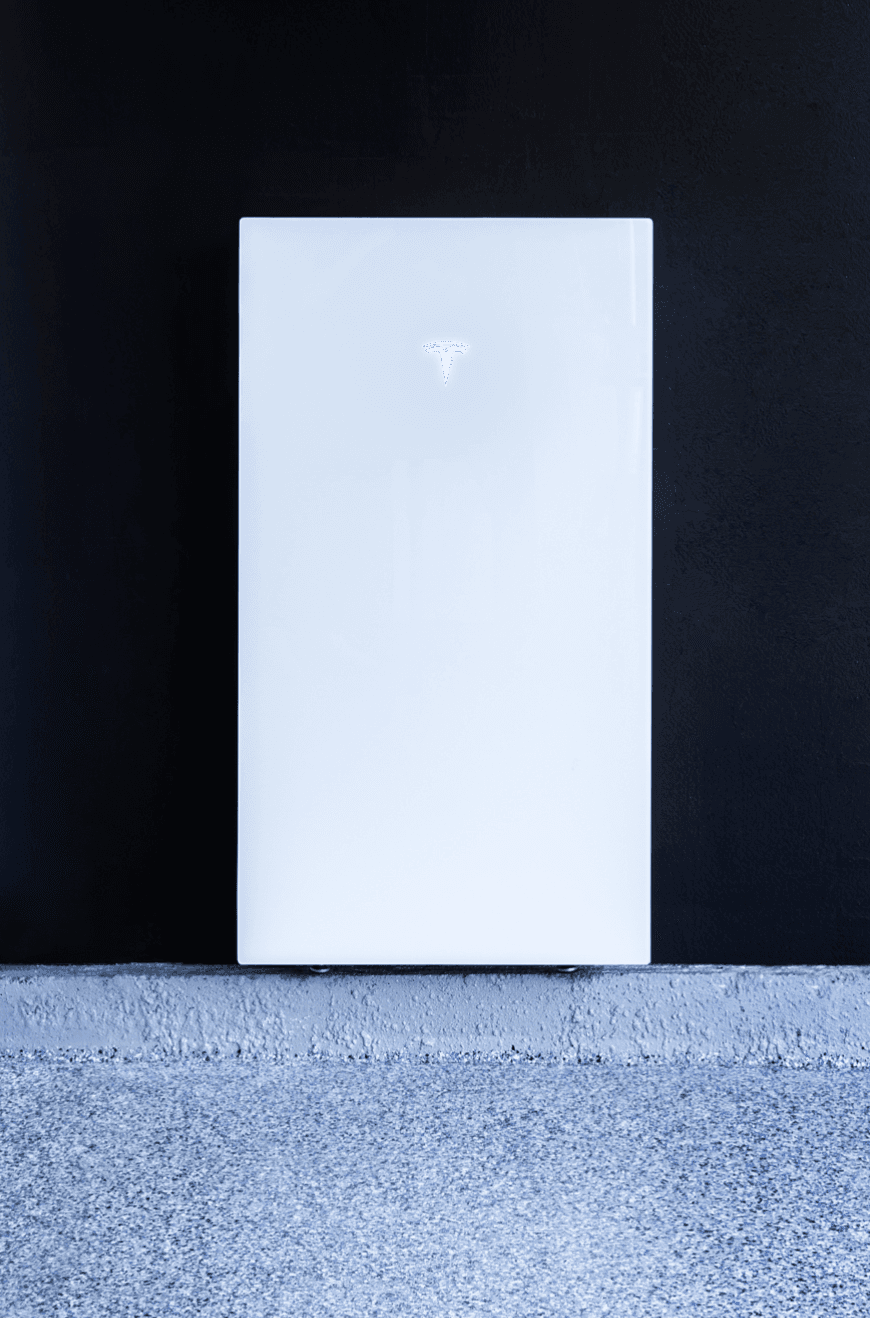
Tesla Powerwall 3
Powerwall 3 is Tesla's most advanced home battery. The third generation includes a fully integrated solar inverter, which means fewer components, a cleaner installation, and no need for a separate inverter in a new solar-plus-storage system. With 13.5 kWh of usable capacity and 11.5 kW of continuous power output, it handles the loads that matter in a real North County home.
13.5 kWh
Usable Capacity
Per unit
11.5 kW
Continuous Power
Peak 22 kW
90%+
Round-Trip Efficiency
Industry-leading
10 Years
Warranty
Unlimited cycles
<20ms
Backup Switchover
Seamless transition
Up to 10
Stackable
Per system
- Integrated solar inverter, no separate inverter required
- Whole-home backup with automatic transfer in under 20ms
- Stackable up to 10 units for larger homes or greater backup time
- Monitor and control through the Tesla app
- Outdoor rated, compatible with solar + grid + generator
Every battery service under one license.
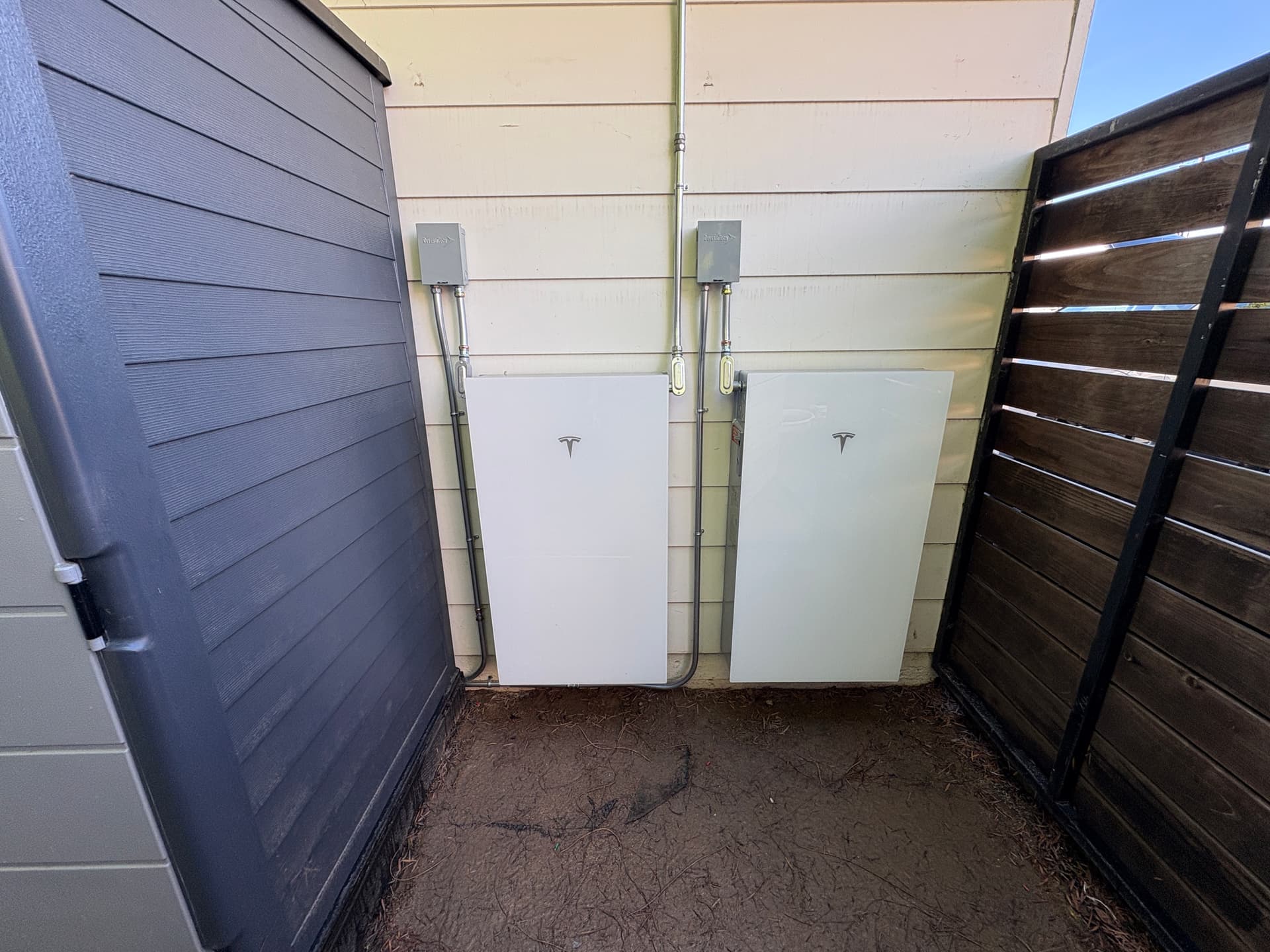
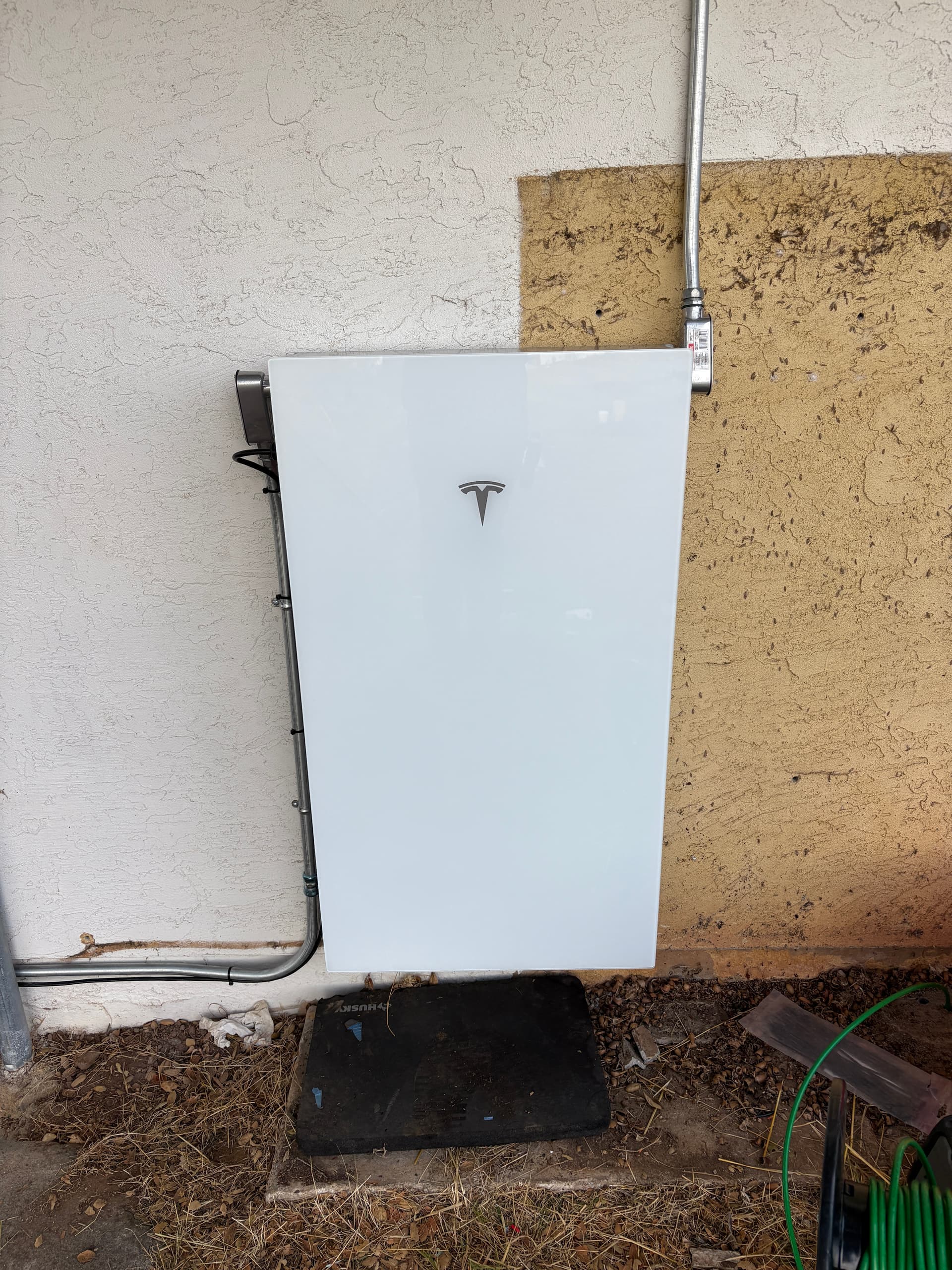
Powerwall 3 Installation
Full turnkey installation: site assessment, permit, electrical work, and commissioning. Powerwall 3 now includes a built-in inverter, which means cleaner installs and fewer potential failure points than older battery designs that need a separate inverter alongside.
- Built-in inverter (no separate solar inverter needed)
- Permit and inspection included
- Commissioned to your Tesla app
Battery Maintenance
Annual system checks, firmware updates, wiring inspections, and performance audits. Batteries require less maintenance than most equipment, but a periodic check catches issues before they become failures.
- All brands serviced
- Firmware and software updates
- Performance and health audit
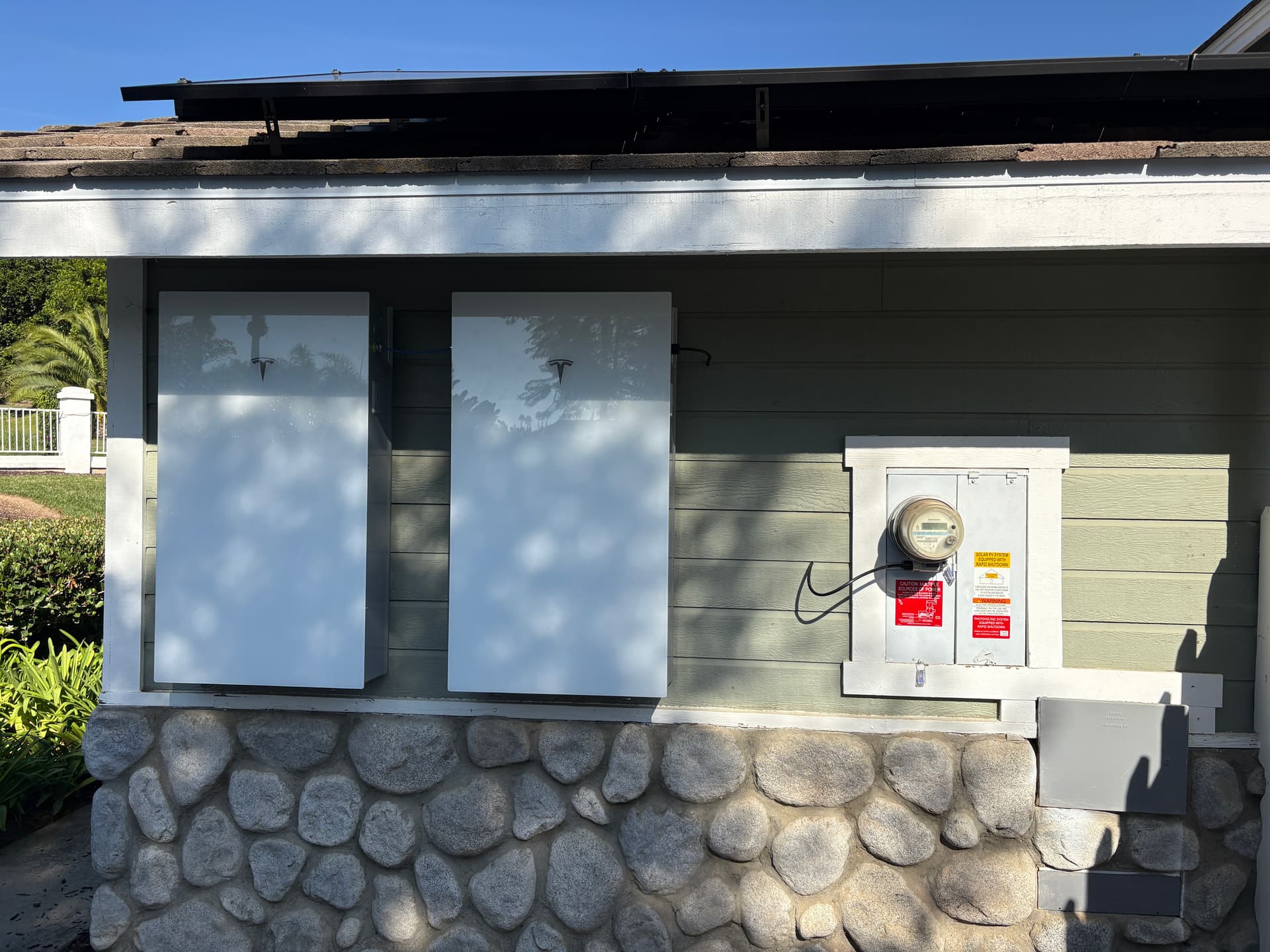
Solar + Battery Packages
Under NEM 3.0, a new solar system without a battery leaves money on the table. We design and install combined solar and storage systems from the start, sized to your actual usage, not an average.
- Designed together, installed together
- Sized to your usage
- Single permit, single crew
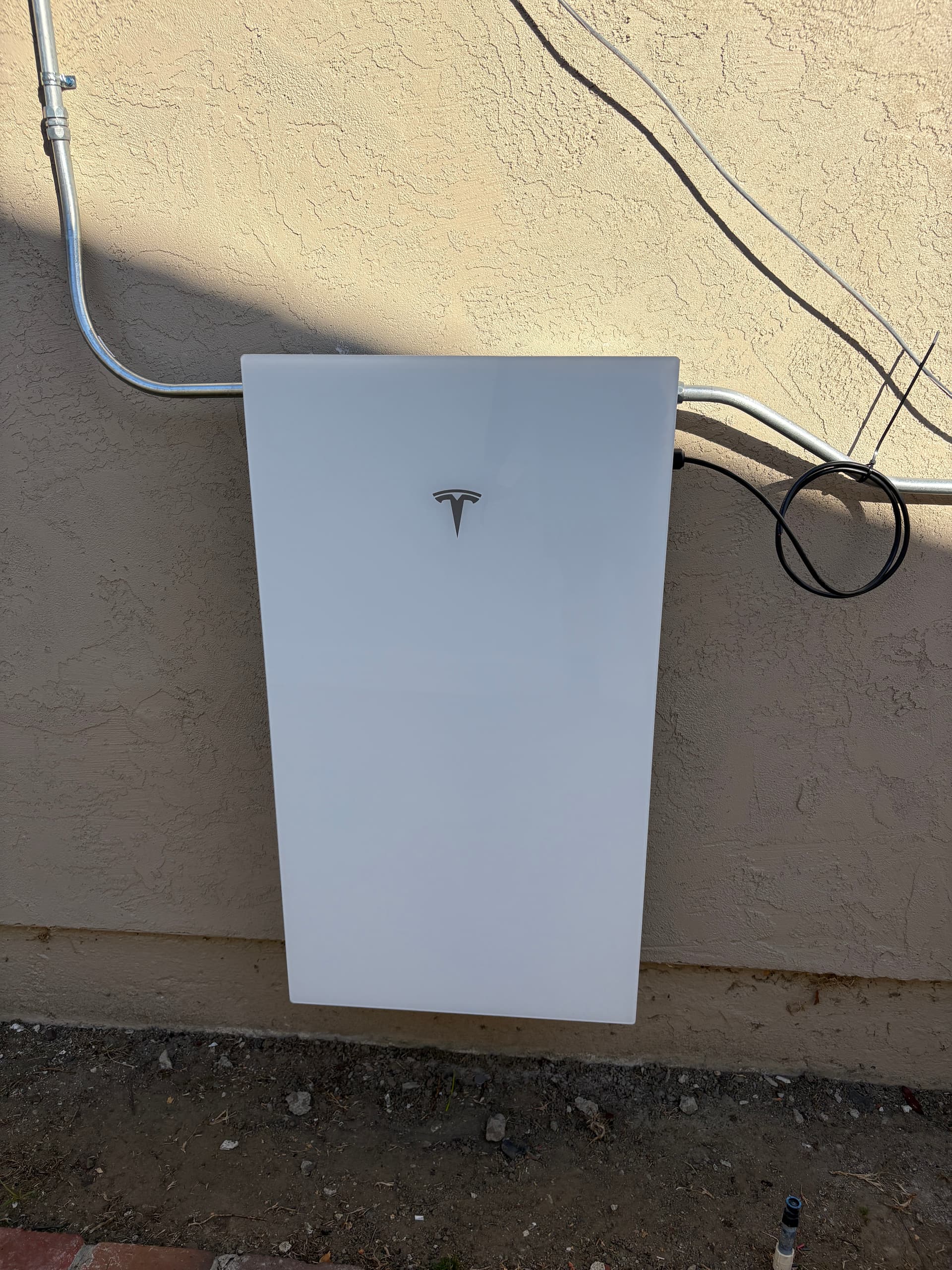
Add Battery to Existing Solar
Already have solar? Adding a Powerwall 3 to an existing system is one of the most common jobs we do. We assess your current setup, confirm compatibility, and handle the full retrofit.
- Compatible with most solar systems
- Full retrofit service
- Existing system assessment included
Real installs. North County homes.
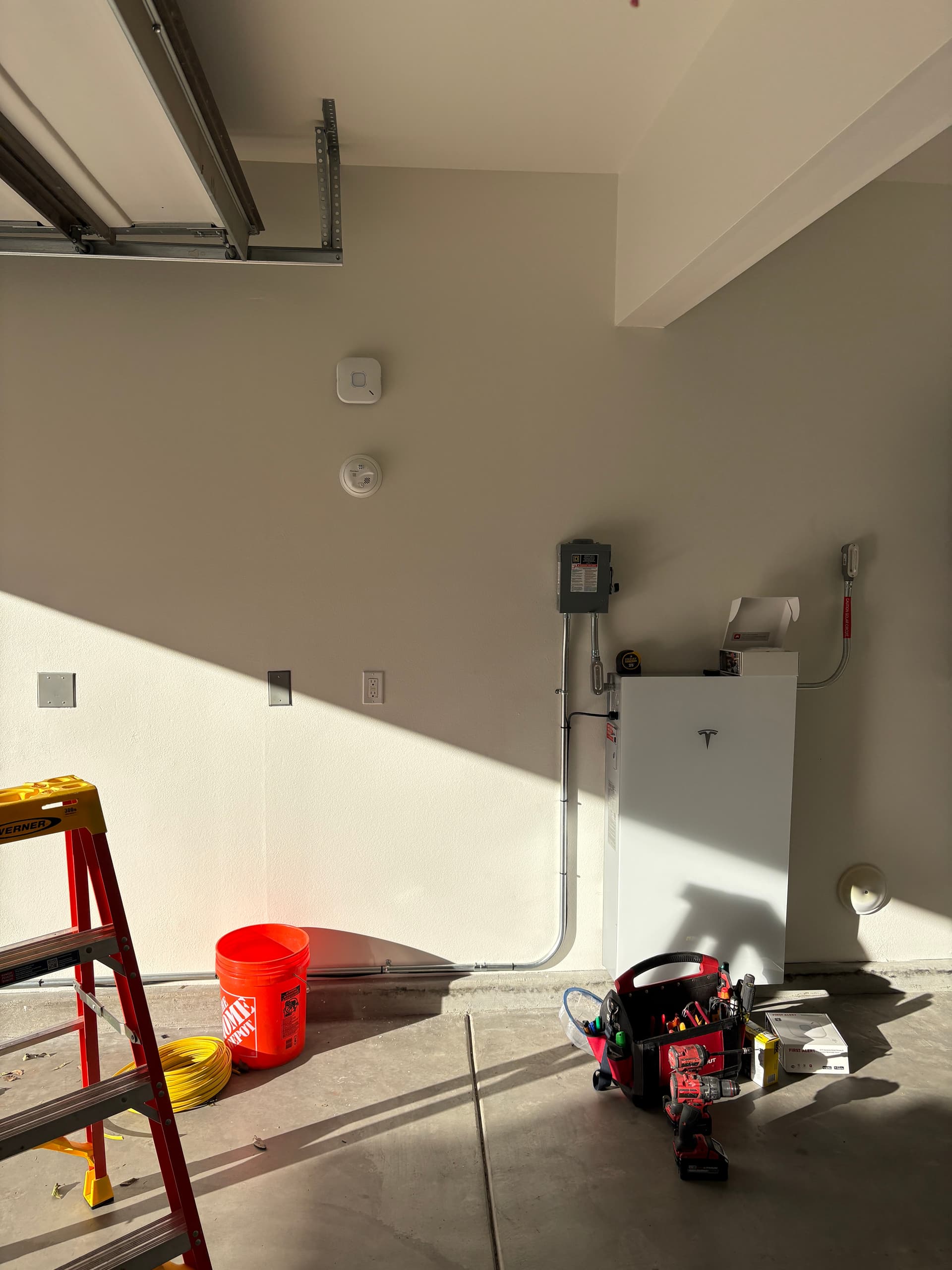
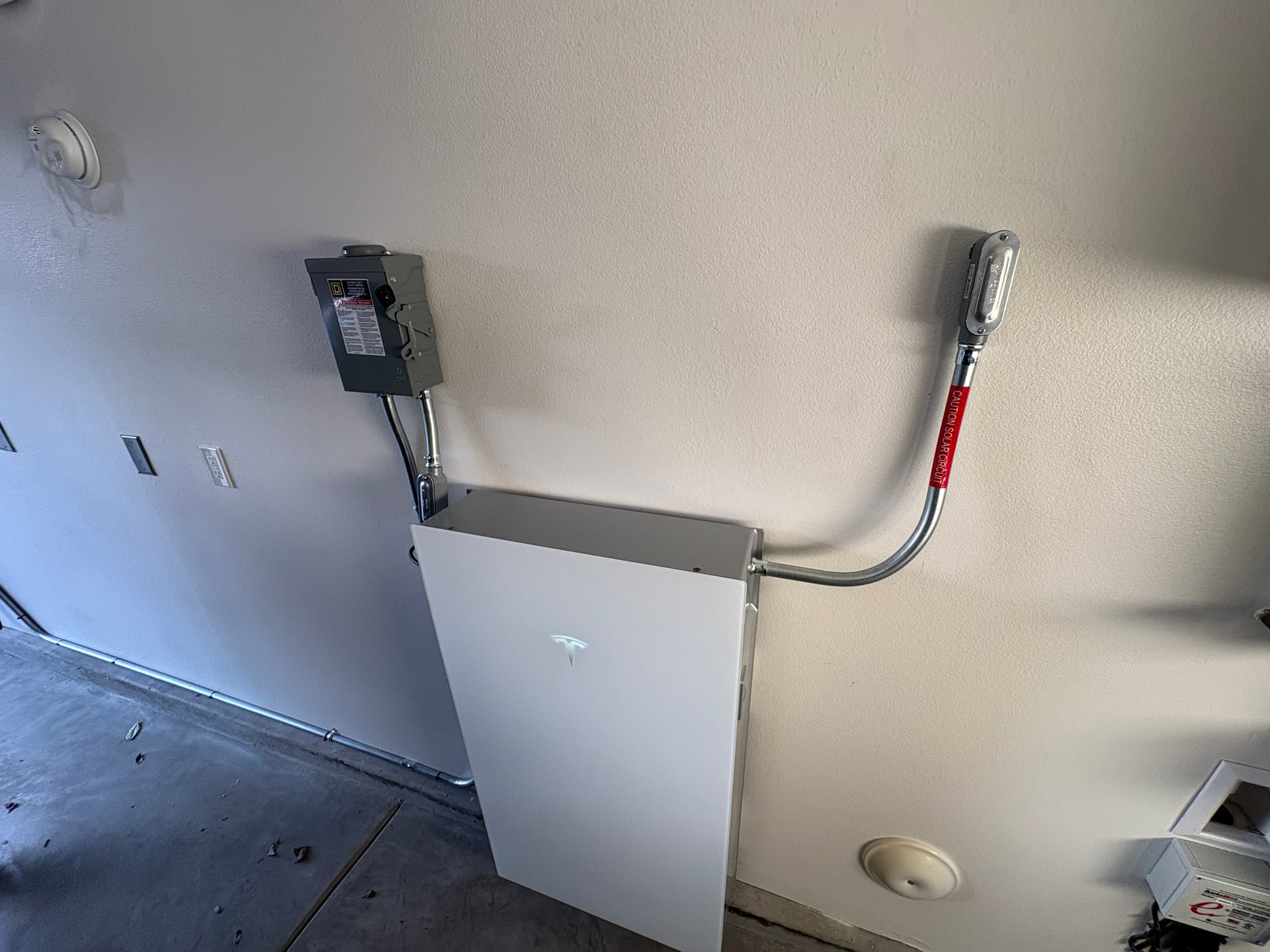
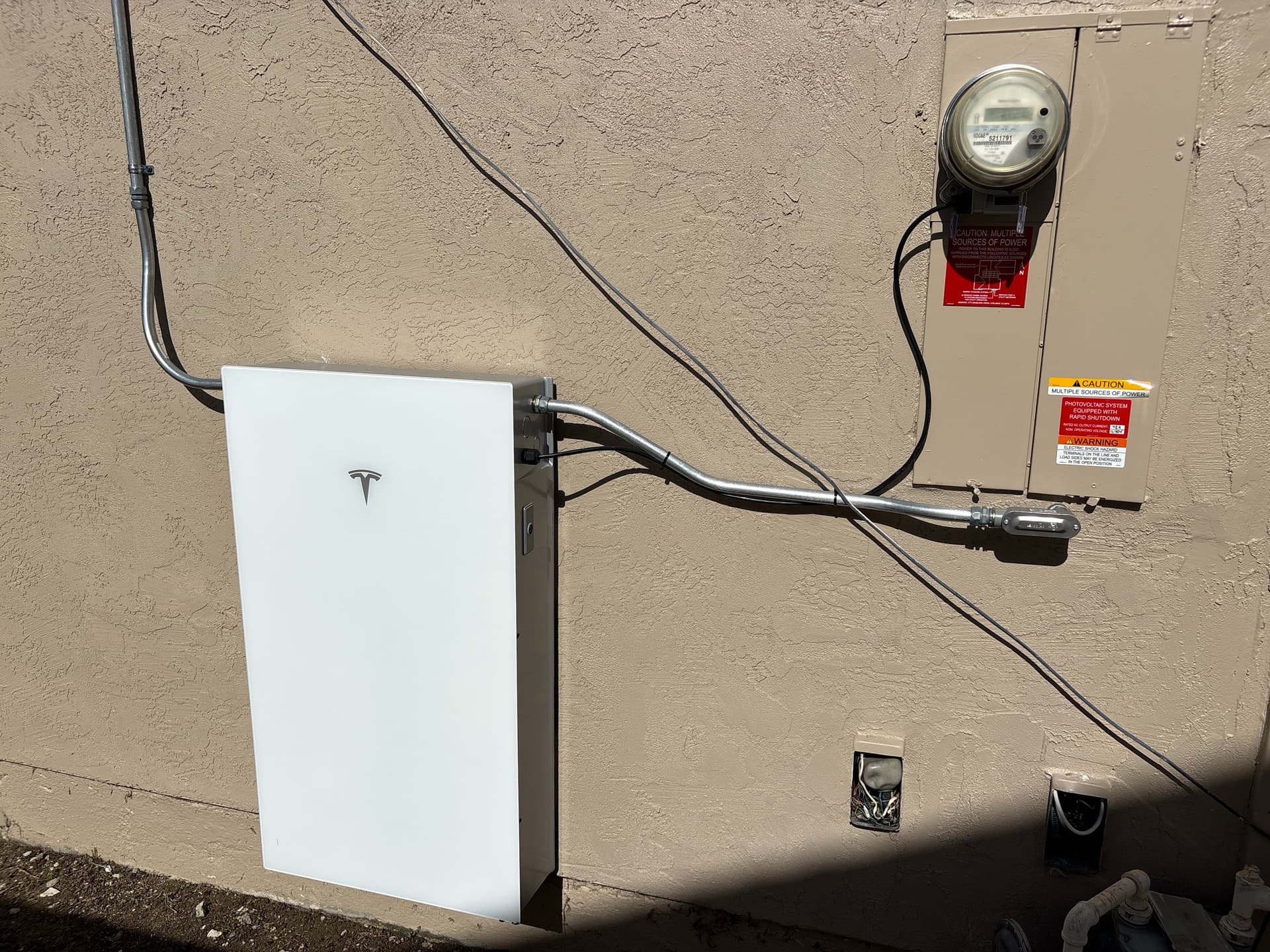
Two great options. We will tell you which fits your home.
We are certified to install Tesla Powerwall 3 and Enphase IQ Battery 10C. Each has real strengths. We will match you to the right product based on your home, your existing equipment, and your goals.
Tesla Powerwall 3
The integrated inverter makes this the cleanest install for new solar-plus-storage systems. Best-in-class software, seamless Tesla ecosystem integration, and an industry-leading 10-year warranty with unlimited cycles.
- 13.5 kWh usable capacity
- Integrated solar inverter
- 11.5 kW continuous power
- 10-year unlimited cycle warranty
- Managed via Tesla app
IQ Battery 10C
The best choice for homes adding storage to an existing solar system, or pairing with Enphase microinverters. Works with virtually any existing solar inverter, and the 15-year warranty is the strongest in residential storage.
- 10 kWh usable capacity
- 15-year warranty (6,000 cycles)
- LFP chemistry, cobalt-free
- Works with any existing solar inverter
- Modular and expandable
How much does a Tesla Powerwall cost installed in San Diego?
How much does a Tesla Powerwall 3 installation cost?
A Powerwall 3 installed in San Diego County starts at $14,298 for a single unit, which covers hardware, permitting, electrical work, and commissioning. Final price depends on your existing solar setup; some standalone installs require additional rapid-shutdown hardware (~$349 per device, roughly one per three panels of existing solar). For new solar plus Powerwall bundles, rapid-shutdown is included in the solar install. Expansion packs start around $9,600 and are the most cost-effective way to add capacity to an existing system. We quote the full installed cost upfront with no surprises.
Why does NEM 3.0 make a battery basically mandatory?
Under NEM 3.0, SDG&E pays you very little for energy you export to the grid during the day, typically 4 to 8 cents per kWh. But at night and in the evening, you buy that same power back at 45.7 cents per kWh or more. Without a battery, you are selling low and buying high every single day. A Powerwall stores what your panels produce in the afternoon and discharges it in the evening when rates are highest. That shift is where most of the financial return now comes from. Solar without a battery under NEM 3.0 is a significantly weaker investment than it was before 2023.
What happens during a PSPS or power outage?
With a Powerwall installed, your home switches to battery power in under 20 milliseconds when the grid goes down. Most appliances and devices never notice the transition. As long as your solar panels can charge the battery during the day, you can stay powered through extended outages. North County San Diego sees regular PSPS events from SDG&E during fire weather conditions, and this is one of the main reasons our customers add battery storage.
What is the difference between Powerwall 3 and older Powerwall models?
Powerwall 3 includes a fully integrated solar inverter. Previous versions required a separate inverter. The built-in inverter means a simpler, cleaner installation with fewer components that can fail. It also supports a higher continuous power output of 11.5 kW, which is meaningful for homes with high-draw appliances like AC units or well pumps. For most new installations, Powerwall 3 is the right choice.
Can you add a battery to my existing solar system?
Yes, and it is one of the most common jobs we do. Powerwall 3 is compatible with most existing solar systems. We assess your current setup during the quote, confirm compatibility, handle the permit, and install the battery alongside your existing equipment. The process typically takes one day for a single unit.
Is there a tax credit for home battery installation?
The 30% federal residential solar tax credit expired December 31, 2025. Standalone battery installations may still qualify for a federal credit when charged at least 50% by solar or another renewable source, depending on your specific setup and filing status. Tax rules have been changing quickly in 2026. We strongly recommend confirming your eligibility with a CPA before making installation decisions based on incentives.
What cities do you serve?
Our primary market is North County San Diego: Fallbrook, Carlsbad, Encinitas, Oceanside, Vista, San Marcos, Escondido, Poway, Rancho Santa Fe, Solana Beach, Del Mar, La Jolla, and surrounding areas. We also serve broader San Diego County. Call us if you are not sure whether we cover your area.
“Landon was amazing, he is very personable as well as professional. A pleasure to have working on our new solar roof and battery.”
Maile Foli, RCH Renewables Customer
Find out what a battery actually does for your home.
We will walk through your energy usage, your current or planned solar system, and what a Powerwall 3 install would realistically look like for your home. No pressure, no pitch. Just a straight answer.
Ian Crilly
Residential Manager, RCH Renewables, C-10 Licensed (#1108682)
Last updated: October 2026