


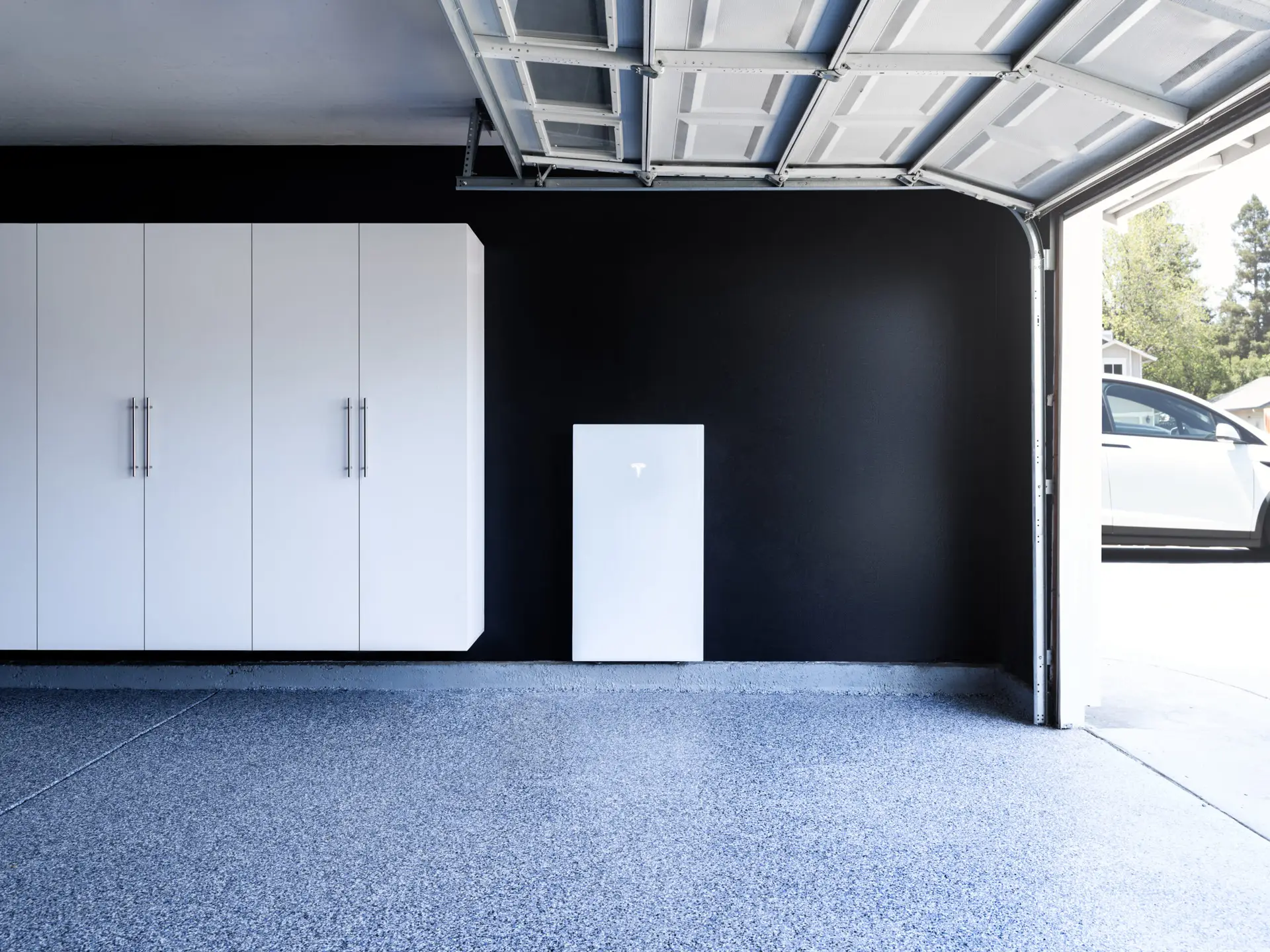
SDG&E Peak Hours: 4-9 PM Costs $0.69/kWh. A Battery Cuts It (Without Losing NEM 2).
If you opened your last SDG&E bill and felt your stomach drop, this is not your imagination.
SDG&E peak hours run 4 p.m. to 9 p.m. every day, and that five-hour window is now the most expensive stretch of your day. The standard advice (run laundry at midnight, schedule the dishwasher) is not what is going to fix it.
I am Ian Crilly, residential manager and co-owner at RCH Renewables. We are a C-10 licensed solar and battery contractor (#1108682) in North County San Diego, and the question every homeowner I sit down with at our consults across Carlsbad, Encinitas, Oceanside, and Fallbrook raises within the first ninety seconds is the same: adding a battery does not change your NEM 2 status. If you are already grandfathered, you stay grandfathered. The CPUC wrote the rules to specifically encourage this.
Here is the actual math for North County San Diego homes in 2026, the rules around it, and what it costs.
Want to see if a battery actually pencils out for your bill? Send your last 12 months of SDG&E bills and we will model the savings exactly.
Get a free quoteSDG&E Peak Hours: What You Actually Pay From 4-9 PM
SDG&E's on-peak hours are 4 p.m. to 9 p.m., every single day of the year. Weekdays. Weekends. Holidays. That window is when grid demand stacks up across all of Southern California, and your rate per kilowatt-hour during those five hours is roughly twice what it costs at 2 a.m.
Here is what you are actually paying on Schedule TOU-DR1, the standard residential plan, effective August 1, 20261:
Summer (Jun 1 – Oct 31)
- On-peak (4-9 PM)$0.69135
- Off-peak$0.46421
- Super off-peak$0.37433
Winter (Nov 1 – May 31)
- On-peak (4-9 PM)$0.61471
- Off-peak$0.53060
- Super off-peak$0.43719
Plus a Base Services Charge of $0.79343 per day, roughly $24 per month fixed before any electricity use.
A few things to notice. Summer on-peak is $0.69135 per kWh. That is high. The same kilowatt-hour run at midnight costs $0.37433 in summer or $0.43719 in winter. That is a $0.32 difference per kWh in summer, every kWh, all five hours, every day, for five months.
If your AC is running through dinner and your dishwasher kicks on at 7 p.m., that is what you are paying for it.
Effective May 1, 2026, SDG&E expanded super off-peak to weekdays from 10 a.m. to 2 p.m. year-round, on top of the existing midnight to 6 a.m. window2. That helps if you can shift loads into those windows. For most households, the 4 to 9 p.m. peak is still where the bill lands.
The April 2026 SDG&E rate increase, explained
SDG&E raised average bundled residential rates in April 2026. The average went from 45.7 to 46.4 cents per kWh, a 1.5 percent increase4. SDG&E filed the change in March 2026 to recover wildfire safety costs from its 2019 through 2022 mitigation work, plus rate design changes from its 2024 rate case.
Here is the part most coverage missed: SDG&E's own rate alert says the typical bundled household bill went slightly down, about a dollar a month, at the same time rates went up. That is not a contradiction. It happened because the new 10 a.m. to 2 p.m. super off-peak window moved a chunk of everyday usage into the cheapest rate tier.
Read that again, because it is the whole game on a time-of-use plan: the average rate matters less than which hours your home pulls from the grid. SDG&E just made the middle of the day cheap. The 4 to 9 p.m. window is still the most expensive power in the county. A battery is the only appliance that moves your evening usage into the cheap window automatically, every day, without anyone thinking about it.
The full SDG&E off-peak and super off-peak schedule
Weekdays
- Midnight - 6 AMSuper off-peak
- 6 - 10 AMOff-peak
- 10 AM - 2 PMSuper off-peak
- 2 - 4 PMOff-peak
- 4 - 9 PMOn-peak
- 9 PM - MidnightOff-peak
Weekends & Holidays
- Midnight - 2 PMSuper off-peak
- 2 - 4 PMOff-peak
- 4 - 9 PMOn-peak
- 9 PM - MidnightOff-peak
The 10 a.m. to 2 p.m. weekday window became super off-peak year-round on May 1, 2026. Before that it was only discounted in March and April. This applies across SDG&E's residential time-of-use plans, including TOU-DR1, EV-TOU-5, TOU-ELEC, and the plans NEM 2 solar customers sit on.
Two things follow from that schedule. If you have a battery, it now has two cheap windows a day to charge from, overnight and midday, which matters on cloudy days. If you have solar without a battery, your midday exports are now credited at the cheapest tier, so the power you sell at noon buys back less of the power you use at 6 p.m. Storing it beats selling it. If your panels are already on the roof, adding a battery to your existing solar system is exactly the move this schedule rewards.
What you can shift, and what you can't
If you have already Googled this, you have probably seen the standard utility-blog tip: shift your laundry, dishwasher, and AC out of the 4 to 9 p.m. window. Run the dishwasher at 11 p.m. Pre-cool the house at 2 p.m.
Some of that helps. Most of it does not move the needle the way you want it to.
Laundry can wait until 10 p.m. Dishwashers run at midnight. EV charging is the easiest one. Schedule it in your car's app and forget about it.
But the loads that actually drive your peak-hour bill are the ones you cannot politely ask to leave the house:
- AC running through a 95° August evening because your house has been holding heat from the afternoon
- Dinner cooking at 6 p.m. because that is when dinner is
- Lights, TV, kids' devices, fans, refrigerator cycling, the baseline of an occupied home from 5 to 9 p.m.
In a typical North County summer evening, the shiftable load is maybe 30 to 40 percent of your peak-window usage. The rest is fixed. You can run laundry at midnight and still get a $400 bill if your AC is fighting through dinner.
That is why the “shift your laundry” advice feels insufficient. It is.
The fix: a battery that covers your peak window
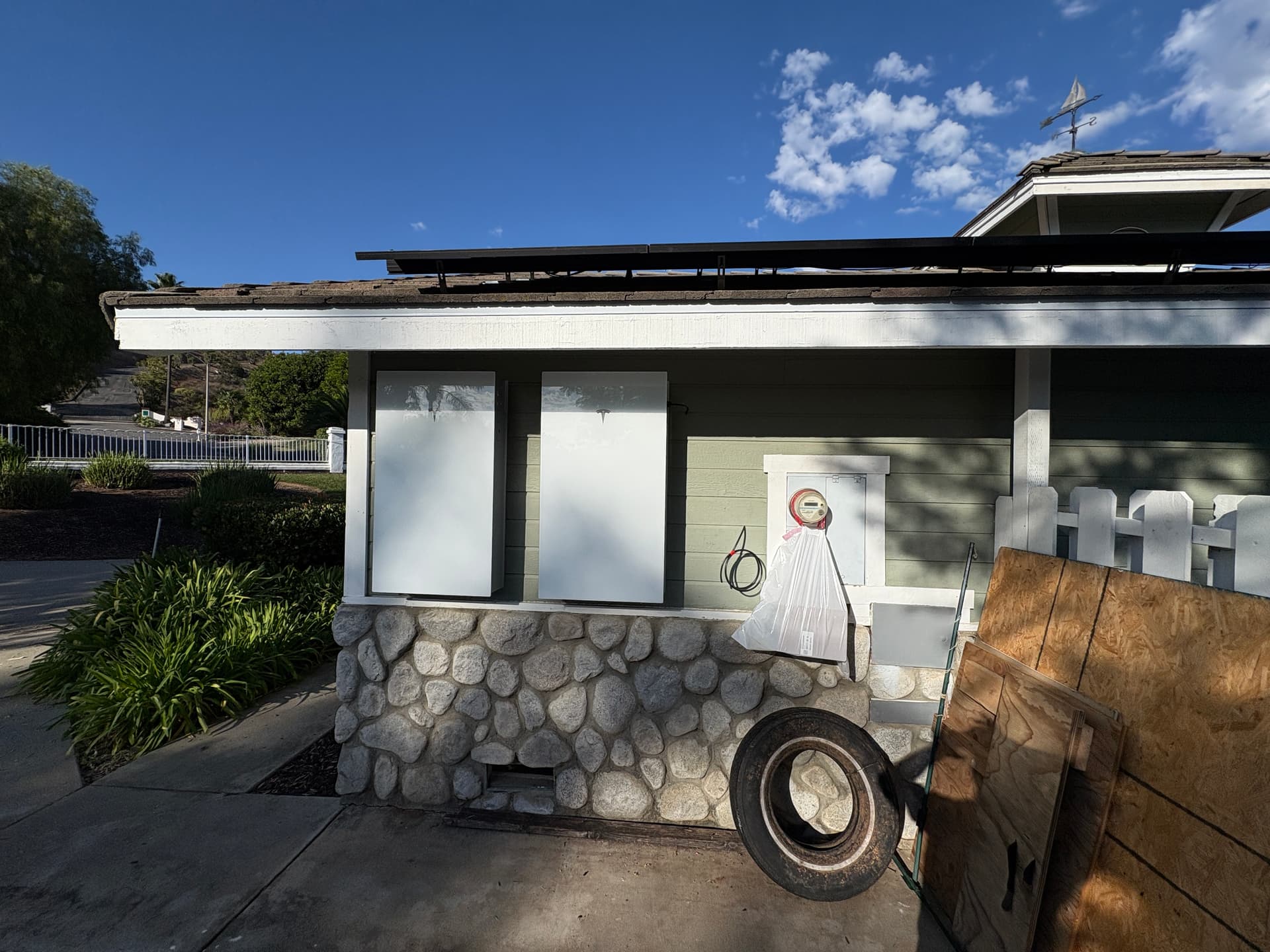
A properly sized home battery does what schedule-shifting cannot. Instead of moving your loads, it moves your power source. Your solar produces during the day. The battery stores it. When 4 p.m. hits and rates jump, your home runs on stored solar instead of grid energy. The AC does not notice. The cook does not change anything. The bill just stops.
The math, using SDG&E's published 2026 rates:
- Summer on-peak$0.69135 / kWh
- Summer super off-peak$0.37433 / kWh
- Per-kWh delta$0.32
If your home shifts 10 kWh of load out of the 4 to 9 p.m. peak window each day (lights, modest AC, basic cooking), you are saving about $95 a month in summer, roughly $860 a year once the narrower winter spread is counted.
A home that is running AC hard through dinner, charging an EV in the evening, and stacking 15 to 20 kWh into the peak window? You are looking at $145 to $190 a month in savings during summer. That is $700 to $970 across the five summer months alone, before counting winter savings or any solar export value.
A Tesla Powerwall 3 holds 13.5 kWh per unit. For most homes, one unit covers the full 4 to 9 p.m. window. Larger homes with whole-home AC or EV charging in the evening may want two units for full coverage and longer backup runtime during outages.
For homes with high evening loads
EVs, AC running into the night, pools. We often pair the battery with a SPAN smart panel that auto-prioritizes circuits during the 4-9 p.m. peak. SPAN smart panel installation in San Diego →
“Won't I lose my NEM 2 if I add a battery?”
This is the question. Every consult. Every time.
The short answer is no. The long answer is the CPUC wrote the rules specifically to encourage NEM 2 customers to add batteries.
If you went solar before April 14, 2023 and got Permission to Operate before April 15, 2026, you are locked into NEM 2 for 20 years from your interconnection date3. NEM 2 credits your exported solar at near-retail rates, around $0.30 per kWh depending on the time of day. NEM 3 (the new Net Billing Tariff) credits exports at roughly $0.05 to $0.08 per kWh. That is a 75 percent reduction in what the grid pays you for every kilowatt-hour you send back.
That delta is real money. It is also why “do I lose NEM 2 if I add a battery?” is the most common question I hear at consults. So let me quote the actual rule.
“Existing NEM 1.0 and NEM 2.0 customers are permitted to add battery storage without triggering a tariff change.”
CPUC Decision D.22-12-056, the ruling that created NEM 3
Tesla's own support documentation says it directly:
“For existing NEM 1.0 and NEM 2.0 customers, adding battery storage does not affect your existing status.”
Tesla Energy Support documentation
The technical reason: when you add only a battery, the CPUC treats it as a system enhancement, not a new installation. Your interconnection agreement stays the same. Your NEM 2 rate stays the same. The battery charges from your existing solar, time-shifts that energy, and dispatches it back to the home (and optionally to the grid) through your existing interconnection.
There is no cap on battery size. You can add one Powerwall, two, three, or four. The CPUC does not put a ceiling on storage capacity for grandfathered customers. Only solar panel additions are capped.
The one caveat
If you also want to add new solar panels (not just a battery), the addition is limited to 10 percent of your original system capacity, or 1 kW, whichever is greater. Battery alone is fully safe. Significant new panels are not. If your system is undersized and you want both more solar and a battery, talk to us first. There are configurations (like non-export setups) that handle this within the rules, but the path is specific to your system.
The plain version we use with customers
We configure the battery so your existing solar continues operating exactly as it did. Your NEM 2 rate stays the same. Tesla Powerwall 3 and Enphase IQ batteries support the non-export setting natively if it is needed.
What about rebates and tax credits in 2026?
A few things you might have heard about that are not real anymore for residential solar plus battery:
- The federal residential solar tax credit (30 percent) expired December 31, 2025. We do not include it in current quotes.
- SGIP's general availability is over. The ratepayer-funded budgets that most homeowners used closed to new applicants December 30, 2025. We do not quote SGIP.
What is still real value, even if nobody is calling it an “incentive”:
Your NEM 2 grandfathering is the incentive nobody talks about.
Under NEM 2, your exported solar credits at near-retail rates, around $0.30 per kWh. Under NEM 3, exports credit at around $0.05 to $0.08 per kWh. That is a $0.22 per kWh delta on every kilowatt-hour you export, locked in for the rest of your 20-year term. Adding a battery preserves all of that.
We do not sell on rebates that do not exist. The math works on the actual rate spread or it does not. If it does, we will show you. If it does not, we will tell you.
What a Tesla Powerwall 3 costs in 2026
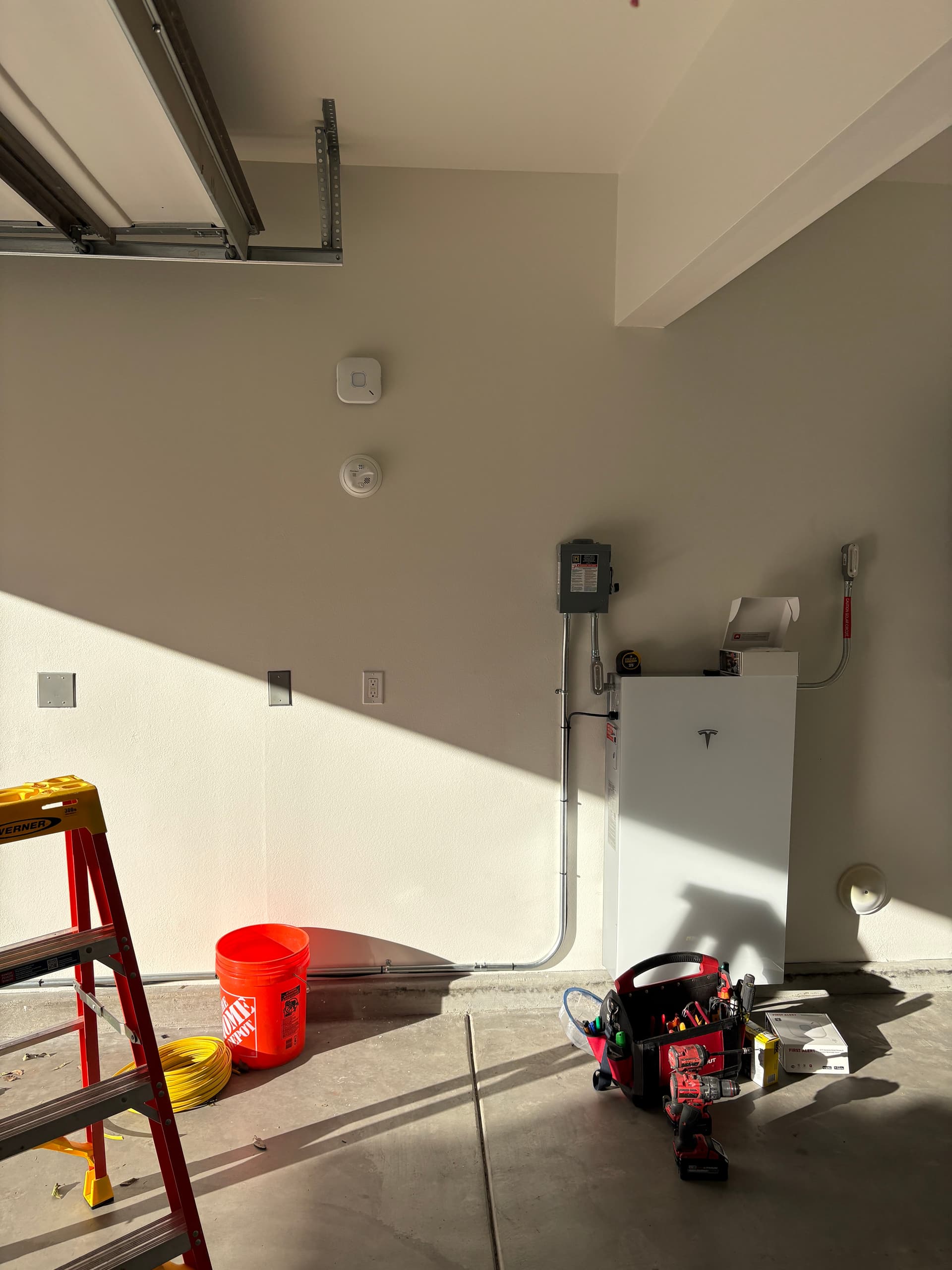
Tesla Powerwall 3 installed prices, as of today:
Standalone Powerwall 3 install
From $13,729
Adding a battery to your existing solar system. Includes permits, engineering, and labor. Some installs require additional rapid-shutdown hardware (about $349 per device, roughly one per three panels of existing solar), which we confirm during the site assessment.
New solar + Powerwall bundle
Bundle pricing
When bundled with a new solar install, rapid-shutdown is part of the solar work and there is no separate line item. Ask for a current bundle quote.
The rapid-shutdown add-on applies to standalone battery installs (a battery added to your existing solar) when your existing solar setup needs rapid-shutdown coordination. For new solar plus Powerwall bundles, rapid-shutdown is part of the solar install and there is no separate line item.
Two examples for a standalone battery with rapid-shutdown
- 12-panel home (4 devices)$15,125
- 21-panel home (7 devices)$16,172
We give you an exact number after a free site assessment. No “starting at” pricing, no surprise fees.
For full Powerwall 3 specs, runtime during outages, warranty details, and how it integrates with existing solar: Tesla Powerwall installation in San Diego →
When to act
A few things we are watching:
Rates are not going back.
The May 1, 2026 super off-peak expansion is helpful, but it is an adjustment to the time-of-use structure, not a rate cut. SDG&E's peak rate has trended up every year. We do not expect that to reverse.
NEM 2 is closed to new applicants.
The April 15, 2026 PTO deadline has passed. If you are already on NEM 2, you keep it for the rest of your 20-year term. Adding a battery does not risk that. But the program is over for anyone who was not already in.
Summer rates run through October 31.
Summer pricing is in effect June 1 through October 31. Every summer month on the grid is $145 to $190 in peak charges that a battery would have offset.
The federal tax credit is gone.
The savings calculus is now standalone. There is no rebate clock to wait for. The math works on the rate spread, and the rate spread is bigger than it was three years ago.
The right time to add a battery is “before the next summer bill.”
Sources
- 1. sdge.com Schedule TOU-DR1 Total Rates Table, effective August 1, 2026.
- 2. nbcsandiego.com SDG&E announces new daytime super off-peak hours, April 21, 2026.
- 3. cpuc.ca.gov CPUC NEM Modernization Fact Sheet (Decision D.22-12-056), December 2022.
- 4. sdge.com Bundled Electric Rate Change Alert, April 2026 (Advice Letters 4791-E, 4791-E-A).
Frequently asked questions
What are SDG&E peak hours?
SDG&E's on-peak window is 4 p.m. to 9 p.m. every day of the year, when grid demand and rates are highest. On the standard residential plan (Schedule TOU-DR1), summer on-peak rates (June 1 to October 31) are $0.69135 per kWh and winter on-peak rates are $0.61471 per kWh, effective August 1, 2026. Outside that window, rates drop to off-peak (around $0.46 to $0.53 per kWh) or super off-peak (around $0.37 to $0.44 per kWh). Since May 1, 2026, super off-peak includes weekdays from 10 a.m. to 2 p.m. year-round.
Can I add a battery to my NEM 2 solar without losing grandfathering?
Yes. CPUC Decision D.22-12-056 explicitly permits NEM 1 and NEM 2 customers to add battery storage without triggering a tariff change. Tesla's own support documentation states: "For existing NEM 1.0 and NEM 2.0 customers, adding battery storage does not affect your existing status." Battery size is not capped. The only caveat: if you also want to add solar panels, the addition is limited to 10 percent of your original system capacity or 1 kW, whichever is greater.
How long does NEM 2 grandfathering last?
20 years from the date your system was approved for interconnection (your PTO date). NEM 2 was created by CPUC Decision 16-01-044 in 2016. The April 15, 2026 final deadline for new NEM 2 PTO applications has passed; the program is closed to new applicants but legacy customers remain grandfathered through their full 20-year term.
Is SGIP still available in 2026?
SGIP's general availability is over. The ratepayer-funded budgets most homeowners used closed to new applicants December 30, 2025. We do not include SGIP in current quotes.
How much can a battery actually save on my SDG&E bill?
The math depends on your specific usage. Summer on-peak ($0.69135 per kWh) and super off-peak ($0.37433 per kWh) differ by $0.32 per kWh. A typical home shifting 10 kWh per day out of the 4 to 9 p.m. peak saves about $95 a month during summer, roughly $860 a year across both seasons since the winter spread is narrower. A home with AC running into the evening, plus EV charging, plus dinner cooking, often shifts 15 to 20 kWh per day and saves $142 to $190 per month in summer. We model your actual usage from your last 12 months of bills before quoting.
What is the difference between off-peak and super off-peak hours?
Off-peak is the middle tier (around $0.46 per kWh in summer). Super off-peak is the cheapest tier (around $0.37 per kWh in summer, around $0.44 in winter). On Schedule TOU-DR1, super off-peak windows are: weekdays from midnight to 6 a.m., weekdays from 10 a.m. to 2 p.m. (year-round since May 1, 2026), and weekends and holidays from midnight to 2 p.m. Off-peak is everything else outside the 4 to 9 p.m. peak window.
Get the math for your specific bill
We will not pressure you to buy. We just show you the math. Send us your last 12 months of SDG&E bills. We model the actual savings against your real usage profile, size the battery against your actual peak-window load, and quote the install with no “starting at” footnotes.
Last updated: May 2026