


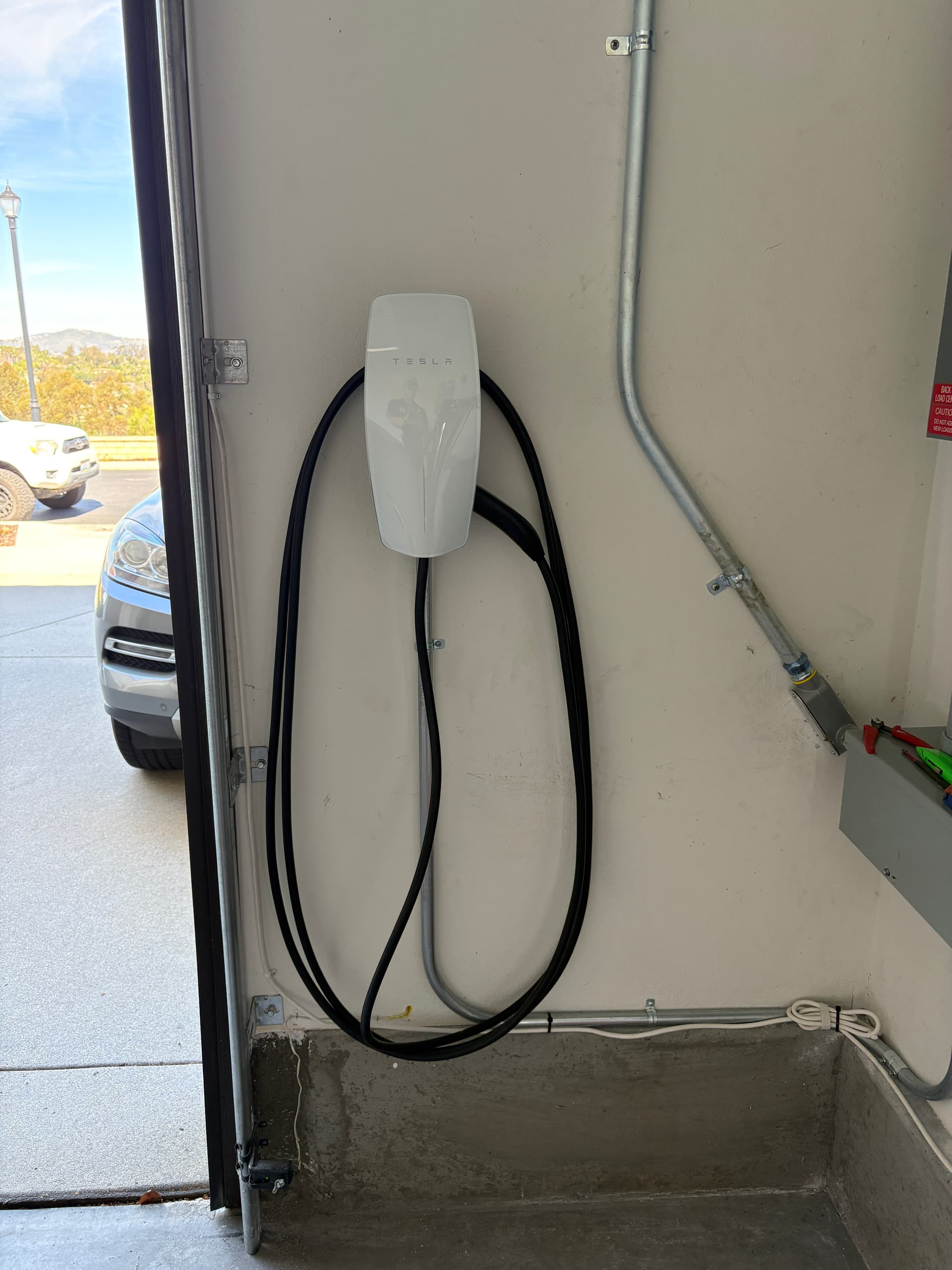
Tesla Powershare Installation in North County San Diego
Your Cybertruck has up to 123 kWh of battery. Powershare lets it power your home. RCH Renewables was on the original Tesla Powershare rollout team. Ian Crilly completed 30+ Powershare installations when the technology first launched. We have brought that experience to North County San Diego.
Your Cybertruck is a 123 kWh battery on wheels. Powershare connects it to your home.
Tesla Powershare is vehicle-to-home (V2H) bidirectional charging. Your Cybertruck charges from your home's electrical system like any EV, and when you need it, it sends power back the other way.
The grid goes down. SDG&E outages in North County San Diego average 1.5-3 hours, but weather events, wildfires, and equipment failures produce multi-day outages. A Tesla Powerwall holds 13.5 kWh. A Cybertruck holds up to 123 kWh, enough to run a typical North County home for 3-7 days depending on your usage.
You plug your Cybertruck into the Powershare-configured Wall Connector. Your home switches to vehicle power automatically. The transfer happens in milliseconds.
123 kWh
Cybertruck battery capacity
3-7 days
Typical home backup duration
30+
Powershare installs completed
ms
Transfer switch speed
What a Powershare installation requires
Powershare is not a plug-and-play add-on. It requires a properly configured system. We handle all of it. One permit. One crew. One project.
A Tesla Cybertruck with Powershare enabled
Powershare is available on Cybertruck Foundation Series and subsequent models. Not all trim levels include Powershare. Confirm your vehicle supports it before scheduling.
A Tesla Universal Wall Connector (Gen 4) configured for bidirectional charging
The standard Wall Connector is a one-way charger. The Powershare configuration requires specific commissioning in the Tesla installer portal. This is not a DIY job and not something an uncertified electrician can configure.
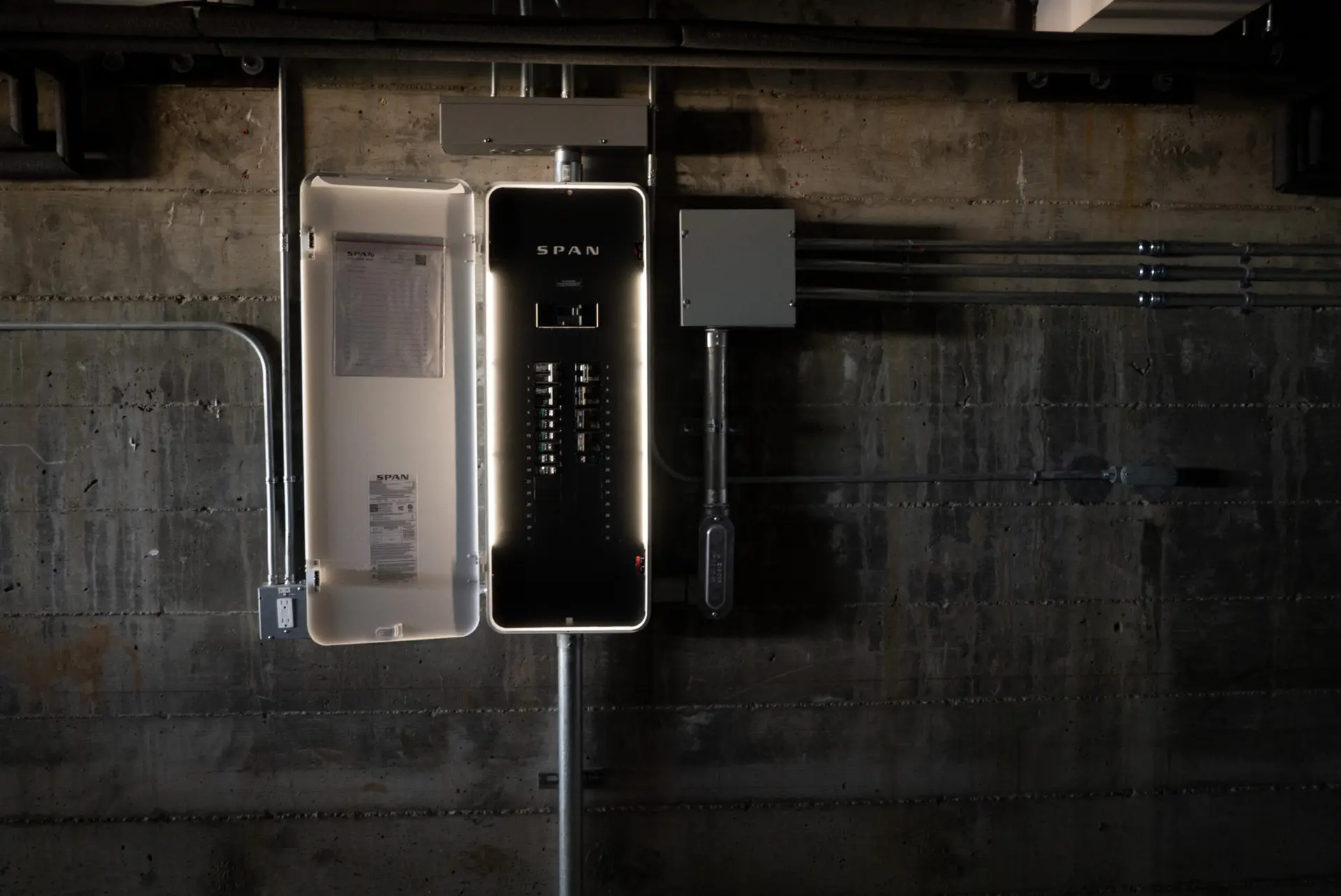
A Powershare Gateway or Powerwall 3
The gateway is the transfer switch between your Wall Connector and your home's electrical system. It detects a grid outage, isolates your home from the grid (required by code), and routes Cybertruck power to your home circuits.
A dedicated 240V circuit sized for the Wall Connector
Same as a standard EV charger installation, plus the additional wiring for the gateway.
We were on the team that helped launch Powershare
Most installers in San Diego are learning Powershare on your job. That is not how we got here.
Ian Crilly was part of Tesla's flagship Powershare rollout team when the technology first came to market. He completed 30+ Powershare installations in Washington before bringing that experience to RCH Renewables in North County San Diego. We have completed Powershare installations locally. We know where the configuration issues appear, how to commission the gateway correctly, and what Tesla support actually needs when something does not go as expected.
Tesla Powershare certification is separate from Tesla EV charger certification. We hold both.
Why this matters
A misconfigured gateway can backfeed live grid lines during an outage, which is a code violation and a serious safety hazard for utility workers. Correct transfer switch commissioning is not negotiable. An installer who has done it 30+ times configures it differently than one doing it for the first time.
Powershare vs. Powerwall: which one do you need?
These are not competing products. They do different things. For many Cybertruck owners, the right answer is both.
Powershare
Powerwall 3
Cybertruck capacity and Powershare output per Tesla product specifications. Backup duration estimate based on 30 kWh average daily household consumption (U.S. EIA, 2023).
The honest framing
Powershare is the most cost-effective path to multi-day backup power if you already own a Cybertruck. A Powerwall is always available; your Cybertruck is not. For homeowners who want both reliability and capacity, stacking Powershare with a Powerwall gives you a system that covers short outages with the battery and longer events with the truck.
Tesla has confirmed that Powerwall + Powershare integration is coming via an over-the-air update. No release date has been announced as of April 2026. We will update this page when it goes live.
Tesla Powerwall installation detailsAdd solar and lower your total energy cost
Solar can help offset your Cybertruck's charging, but the real savings come from charging on SDG&E's EV rate plan during off-peak hours, when electricity costs a fraction of peak rates. A solar system covers your home load during the day, which keeps you from buying peak-priced power. What you do not use, you store or self-consume rather than exporting at low NEM 3.0 rates.
The combination of Powershare plus solar is a strong one, just do not plan your budget around charging your truck for free. Plan it around lower bills and backup power that does not require a generator.
Your panels produce during the day
Excess production charges your Cybertruck
At night, or during an outage, your Cybertruck powers your home
Which vehicles support Powershare right now
Tesla Powershare is available on all Cybertruck models. Confirm Powershare is enabled on your specific vehicle before scheduling.
If you own a different Tesla and want to back up your home, the Powerwall is the current solution.
What a Powershare installation involves
Day 1: Charger and gateway install
We install the Wall Connector (Gen 4) and the Powershare Gateway, and run the dedicated circuit. If your panel needs additional circuit work, we handle it under our C-10 license. This is what we control, and we do it cleanly and correctly.
Backup switch application (out of our hands)
After installation, we apply for the backup switch installation. This is handled by a third party hired by SDG&E, not by RCH. We submit the paperwork and wait. Timeline varies and is outside our control. This step is one of the main reasons Powershare projects take longer than a standard EV charger install.
City permit (after backup switch)
The city permit is pulled after the backup switch is installed. We handle this. We cannot pull the permit before the backup switch is in place, so this step cannot be accelerated by doing things out of order.
Return visit: commissioning
Once the permit clears, we come back to commission the system through the Tesla installer portal. We configure the transfer switch, verify anti-islanding protection, and test the full system before we leave.
Tesla OTA update (if needed)
For some vehicles, Tesla pushes the Powershare software update after commissioning. This is an over-the-air update from Tesla, not something we control. It can take a few additional weeks. We hope the process improves as Powershare scales across more installs.
The physical installation takes one day. The full process from Day 1 to a commissioned, live Powershare system typically spans several weeks due to the SDG&E backup switch step and city permit. We control what we can and communicate clearly when we are waiting on others. We are hopeful the process improves as Powershare becomes more common in San Diego County.
What Powershare costs in North County San Diego
Powershare installation cost depends on your home's electrical setup. Most North County San Diego homes qualify for the simpler path.
Standard install
$2,400 to $5,000
Depending on equipment needed
Most homes in San Diego County qualify. To be eligible:
- No single loads greater than 60A in your main panel
- No Tesla Powerwall already installed
Wall Connector, Backup Switch, dedicated circuit, permit, and commissioning. One day. Fixed price.
Complex install
Starts around $5,500+
Homes not backup switch eligible
Homes with large loads or more complex panel configurations require a different gateway setup. We assess this during the site visit before quoting.
Already have a Powerwall?
If you have a Powerwall installed, Powershare will become significantly cheaper, closer to a standard charger install. The Powerwall already handles the transfer switching. Tesla has confirmed Powerwall + Powershare integration is coming via an over-the-air update. No release date has been announced as of April 2026. We will update this page when it goes live.
Hardware (Wall Connector + gateway) is separate from labor. We give you a fixed-price quote after a brief site assessment. No surprises on install day.
Your Cybertruck can power your home for days. Most installers have never done it.
RCH Renewables was on the original Tesla Powershare rollout team. Ian completed 30+ Powershare installations before the technology was widely available in California. We are Tesla certified for both Wall Connector installation and Powershare gateway commissioning, and we are based in Fallbrook, 30-40 minutes from most North County San Diego homes.
Want to know if Powershare makes sense for your home?
Fill out the form and we will follow up within one business day. Tell us your Cybertruck model and we will let you know exactly what the installation requires and what it costs.
Ian Crilly
Residential Manager, RCH Renewables, C-10 Licensed (#1108682)
Last updated: May 2026