
717kW Wind Storm Structural Assessment and Repair
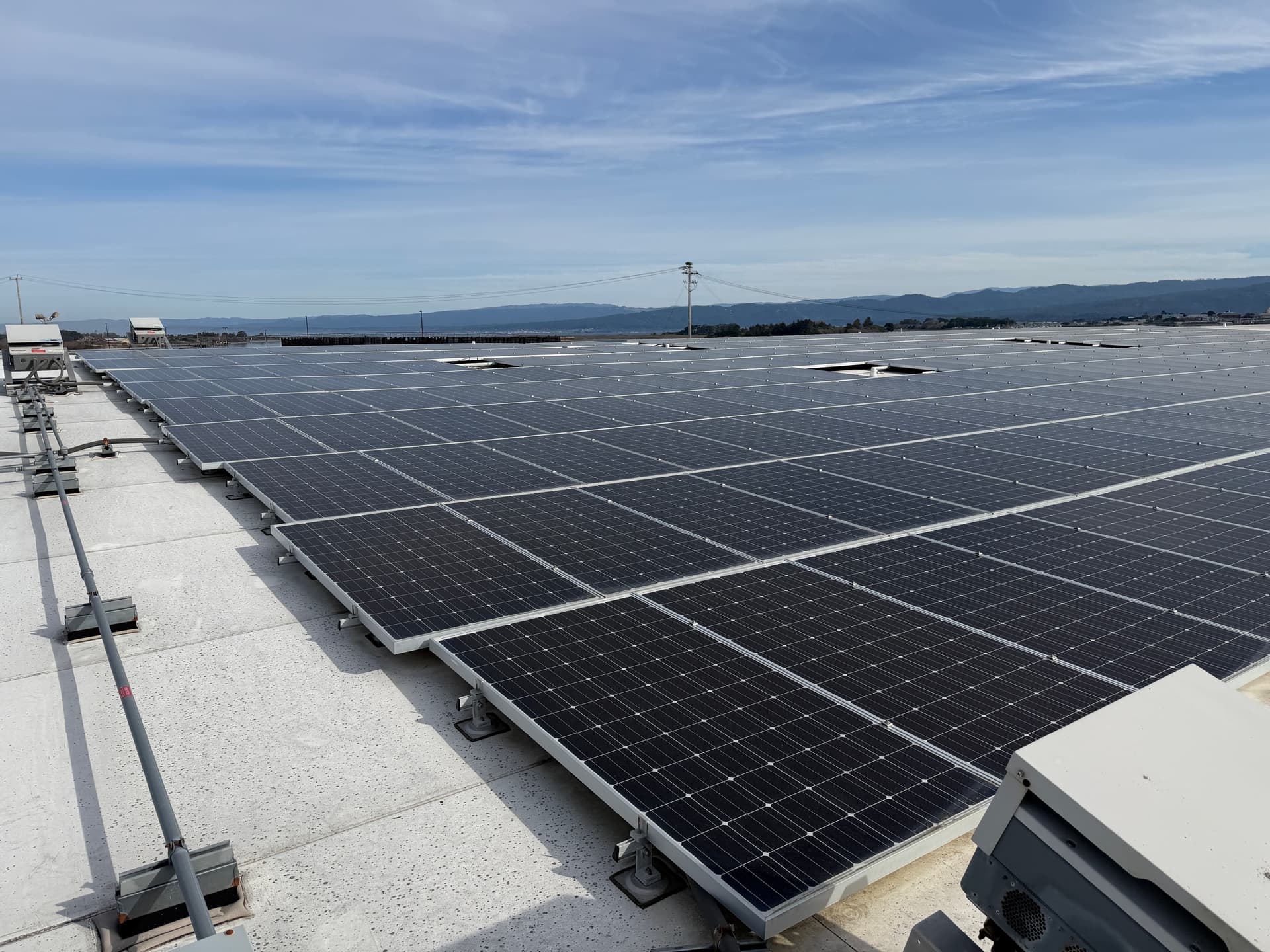
A 717kW rooftop array at a Northern California harbor facility. 4,284 connections inspected. 568 improperly installed. All repairs completed on site.
What does a post-storm structural inspection find on a 717kW rooftop solar array?
A 13.3% defect rate. RCH Renewables torque-checked all 4,284 mid-clamp connections on this 717kW Northern California array after a December wind storm and found 568 improperly installed connections plus 57 compromised mounting feet, many of them pre-existing installation defects rather than storm damage. Every failure was repaired on site during a 2-week deployment.
The array sits on a harbor facility rooftop and uses 2,142 Flextronics modules on an IronRidge racking system. The national solar developer that financed the system needed a licensed contractor on site fast. RCH Renewables, a San Diego-based C-10 licensed electrical contractor (#1108682), mobilized a 4-person crew from Fallbrook to Northern California in 4 days from PO approval.
A 717kW rooftop array. 700 miles from our shop.
A 717kW rooftop solar array sits on top of a harbor facility in Northern California. The system uses 2,142 Flextronics modules on an IronRidge racking system with Yaskawa Solectria inverters.
In December, a wind storm hit the facility. On a rooftop, wind does not just push panels around. It creates uplift forces on every module, stresses every mid-clamp connection, and tests every mounting foot anchored to the roof structure. A single compromised connection on the ground is an equipment issue. A compromised connection on a rooftop is a structural liability. Panels that detach in wind become projectiles.
The system was financed and developed by a national solar developer. They needed a licensed electrical contractor who could deploy a crew to Northern California on short notice, perform a full structural assessment, and execute repairs on site. The developer did not have a local crew with the licensing and experience to handle this scope.
They called RCH Renewables in Fallbrook, California. The distance from Fallbrook to Northern California is roughly 700 miles. RCH mobilized a 4-person crew in 4 days from PO approval.
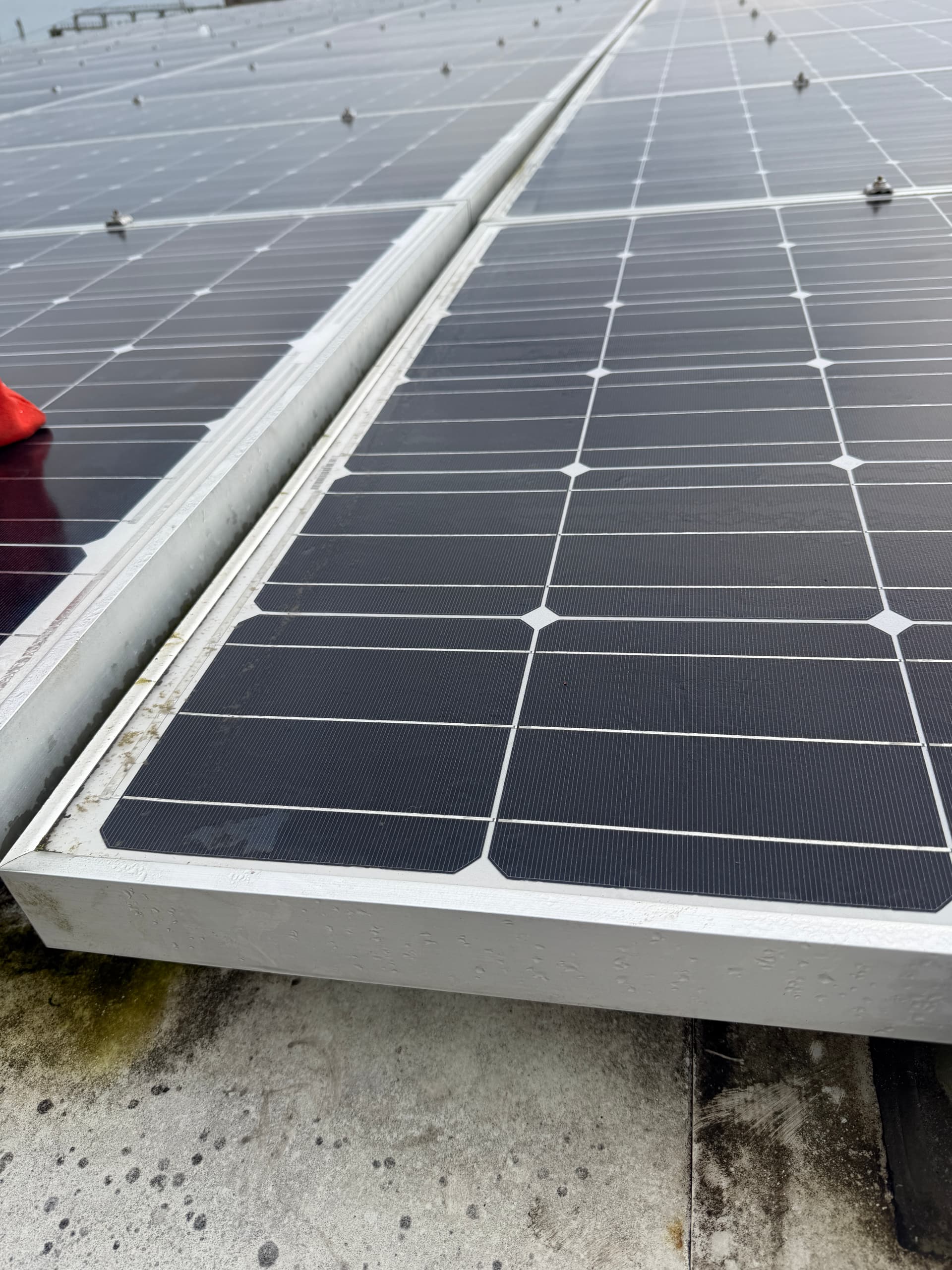
4,284 connections between the modules and the roof.
The first concern is structural, not electrical. Before anyone checks whether the inverters are producing, the question is whether the modules are still properly secured to the roof.
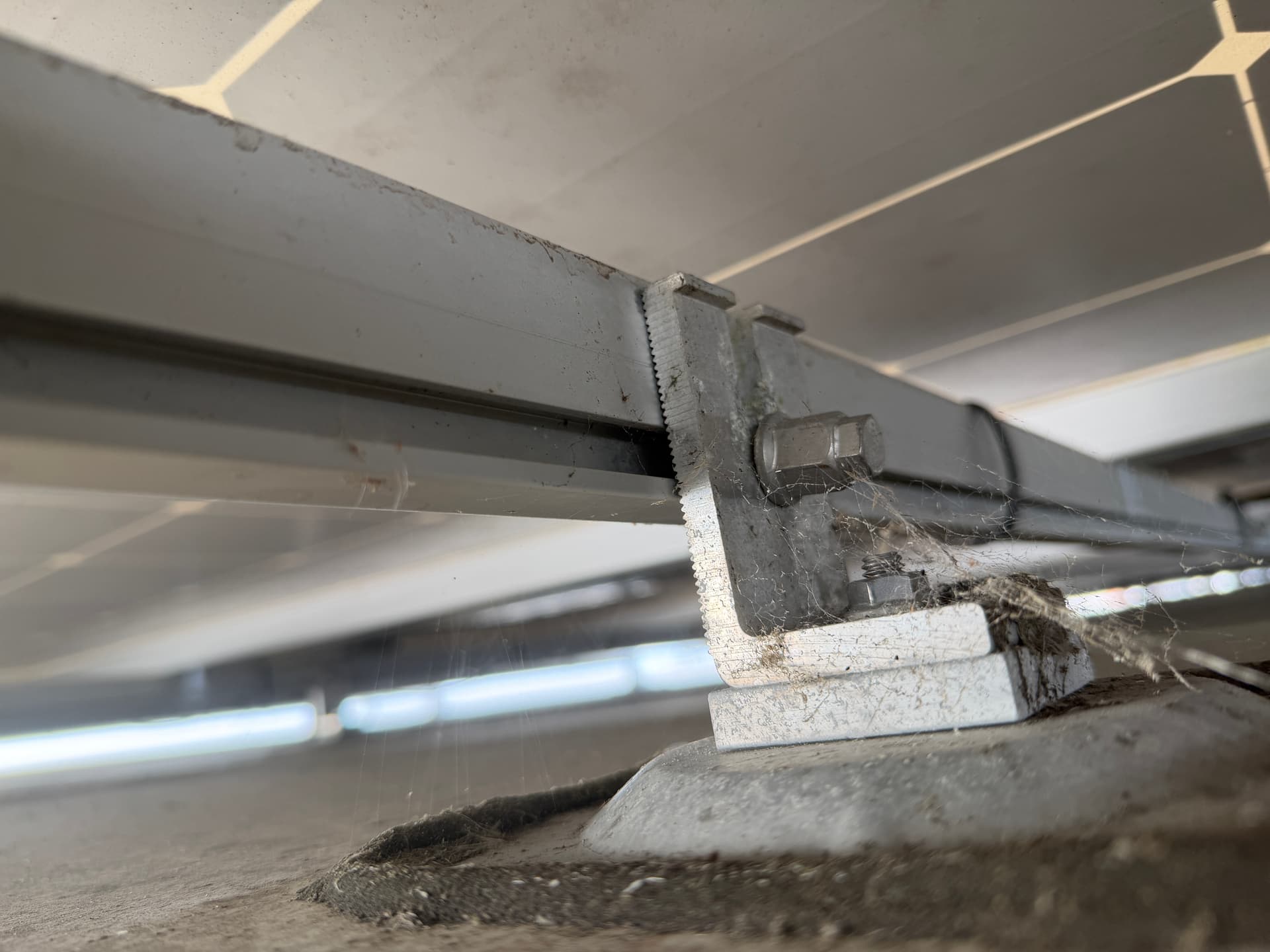
A mid-clamp is the fastener that locks a solar module to the rail of a racking system. Each module has two. On a 717kW system with 2,142 modules, that is 4,284 connections between the modules and the IronRidge racking system. Every one of those connections needs to be verified after a wind event.
The racking system itself is mounted to the roof structure through feet. Each foot is an anchor point that bears load from the panels above it. Pull-testing is the structural verification method where each mounting foot is mechanically loaded to confirm the anchor between the racking and the roof structure is intact. If a foot is compromised, the entire section of racking above it is at risk.
RCH's crew spent 2 weeks on site. The scope was simple in concept and massive in execution: inspect every connection, identify every failure, and repair everything found.
Torque-check every clamp. Pull-test every foot.
The crew worked systematically across the rooftop, section by section. Every mid-clamp connection was torque-checked. Every mounting foot was pull-tested. There is no shortcut for this on a rooftop array. You cannot spot-check a sample and extrapolate. After a wind event, every connection is suspect until it is verified.
What the crew did
Torque-checked all 4,284 mid-clamp connections across 2,142 modules
Pull-tested mounting feet across the entire IronRidge racking system to verify structural integrity
Documented every connection that failed spec
Repaired all identified failures on site
What the crew found
568 of 4,284 connections improperly installed
A 13.3% defect rate across the full array. These were not all wind damage. Many were installation defects that the wind event exposed. An improperly torqued mid-clamp might hold a module in calm conditions. Under sustained wind load, it becomes a failure point.
57 mounting feet compromised
These are the structural anchor points between the racking system and the roof. 57 compromised feet on a rooftop system represents a significant structural risk, both to the solar array and to the building itself.
The distinction matters. The wind storm was the trigger for the assessment, but the root cause of many failures was the original installation quality. RCH did not just repair wind damage. They found and fixed pre-existing installation defects that would have eventually failed regardless.
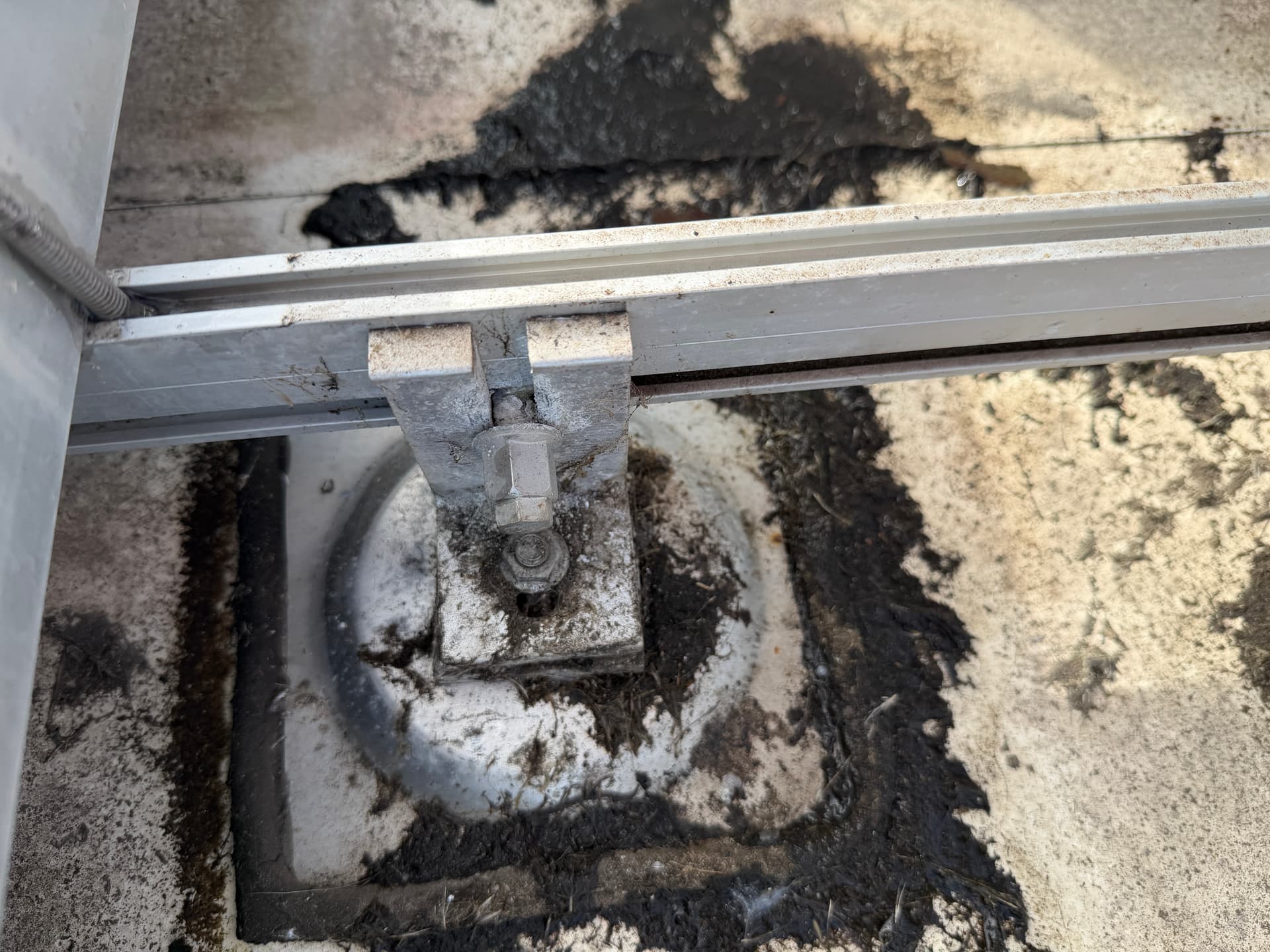
700 miles from the shop. On site in 4 days.
RCH Renewables is based in Fallbrook, North County San Diego. This project was in Northern California, roughly 700 miles away.
The national solar developer needed a C-10 licensed contractor who could:
Mobilize a full crew on short notice
Handle the structural assessment scope (4,284 connections across a 717kW rooftop system)
Perform all repairs on site
Work on a rooftop with the safety protocols and equipment that a commercial-scale project requires
RCH deployed 4 crew members in 4 days from PO approval. The crew stayed on site for 2 weeks and completed the full assessment and all repairs.
The Fallbrook-to-Northern-California deployment is a proof point, not a departure. RCH's core market is San Diego County. But when a national developer needs a licensed crew that can handle a project at this scale, geography is not the constraint. Licensing, capability, and availability are.
Deployment Details
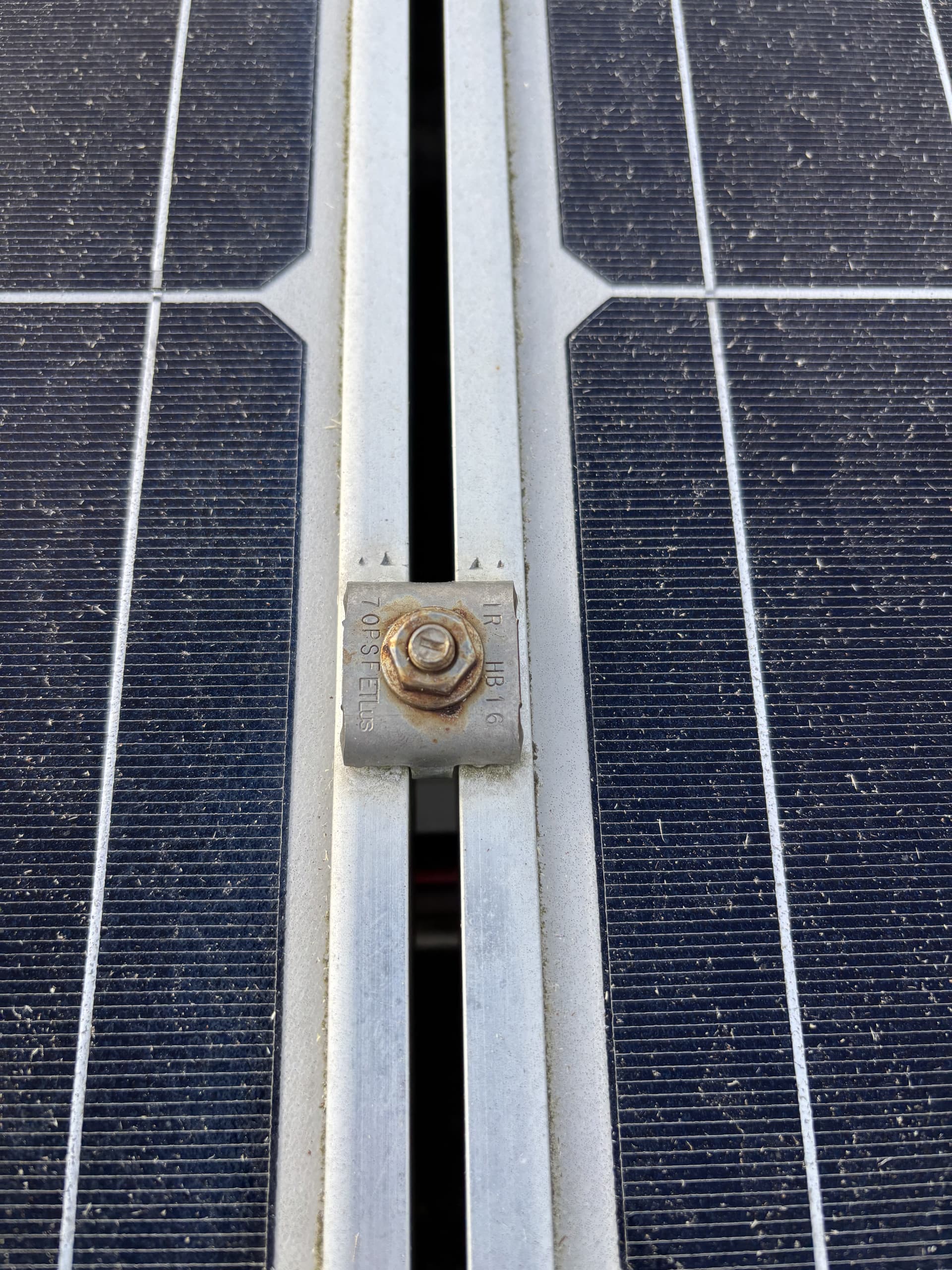
What this would have cost if left unaddressed
This section is for the Facility Director who needs to make the case to their CFO.
Structural risk
57 compromised mounting feet on a rooftop. If a section of racking fails under wind load, the damage extends beyond the solar array to the roof structure itself. Roof repair on a commercial building of this size, combined with solar system damage, represents a six-figure liability exposure.
Panel detachment risk
568 improperly installed mid-clamp connections. Under sustained wind, any of those connections could fail and release a module. On a rooftop, a detached solar panel becomes a projectile. The liability exposure from a panel leaving a commercial rooftop is not just property damage. It is personal injury risk.
Production loss
Even without a catastrophic failure, compromised connections reduce the mechanical stability of modules, which affects their electrical performance. Micro-cracking from vibration, connector stress from movement, and shading from shifted modules all reduce production incrementally.
Insurance implications
A structural assessment report that documents known defects and completed repairs is a defensible position. A known defect that was not repaired is an exposure that insurance may not cover.
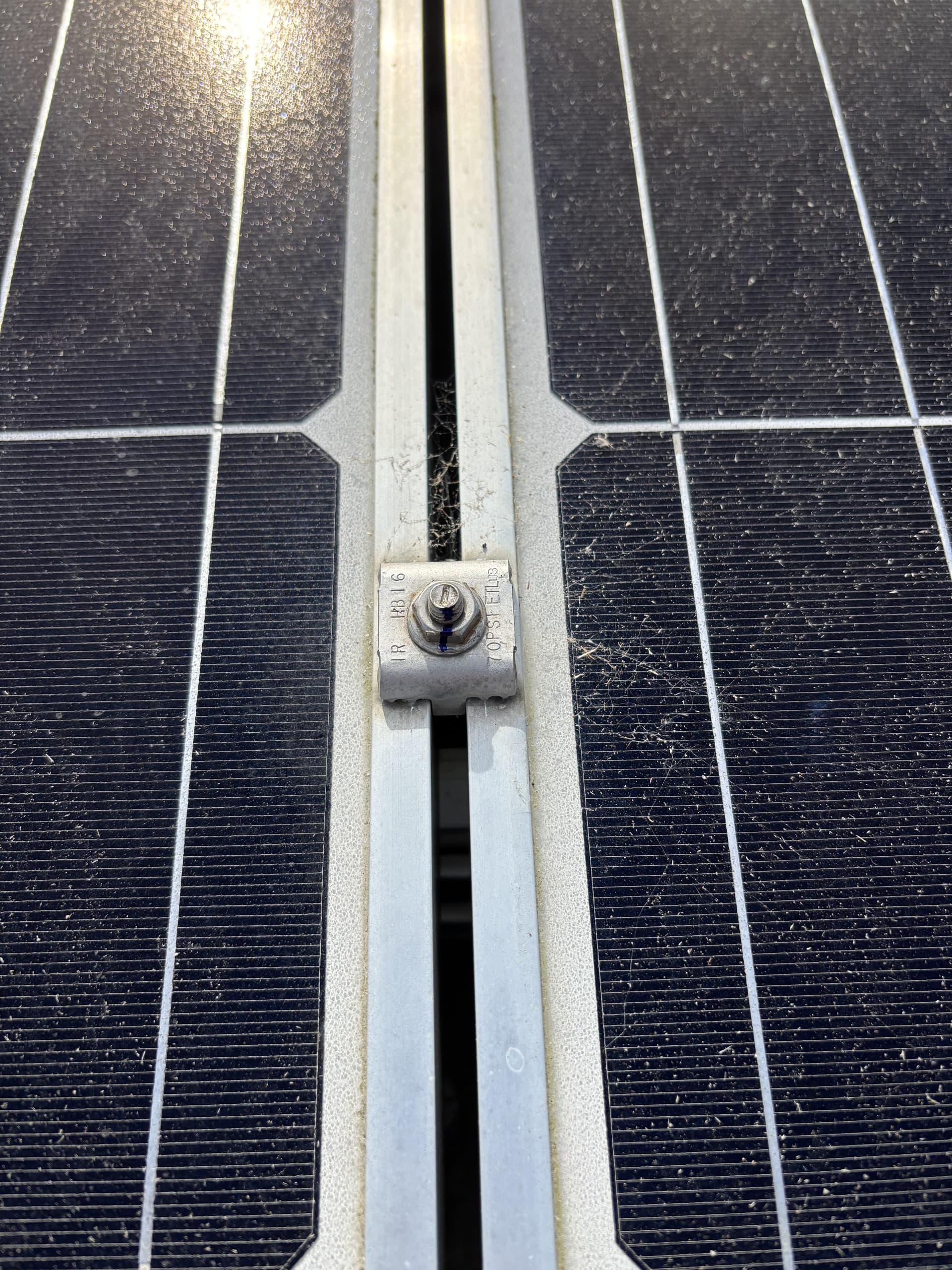
Full project results
Every connection on the system has been inspected and verified. Every failure has been repaired. The developer has a complete structural assessment report documenting the full scope of findings and repairs.
Landon Raster
President, RCH Renewables · C-10 Licensed Electrical Contractor (#1108682)
“4,284 connections. You check every single one. There is no sampling protocol that covers your liability on a rooftop after a wind event.”
Need a structural assessment or emergency response for a commercial solar system?
RCH Renewables deploys licensed crews for commercial solar troubleshooting, structural assessment, and emergency repair across California. See our full commercial solar O&M services or contact Landon to discuss your project.
Discuss your project with Landon.
Commercial solar troubleshooting, structural assessment, or emergency repair. Fill this out with your site details and we will follow up within one business day.