


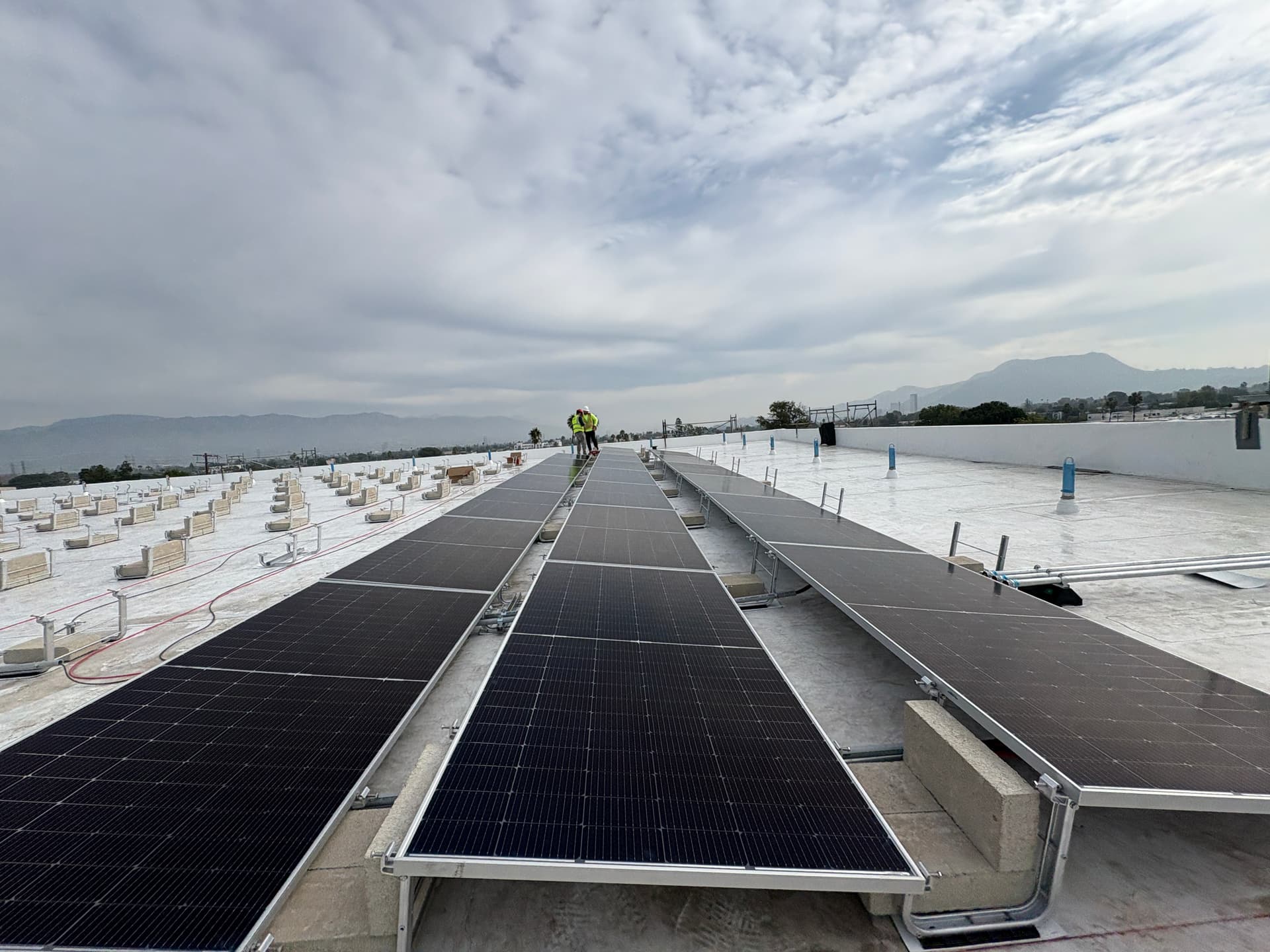
What Happens When Your Commercial Solar O&M Contractor Disappears
SunPower filed Chapter 11 on August 5, 2024, affecting more than 500,000 customers on systems that still have 15 to 25 years of expected life. By the time they filed, their commercial O&M business had already changed hands: Clairvest Group acquired it in May 2020 and rebranded it as NovaSource Power Services. TotalEnergies acquired SunPower's Commercial and Industrial Solutions business (installation and development) separately in February 2022 for $250 million. When the bankruptcy hit, customer support through mySunPower went dark on September 20, 2024. Monitoring data continued to function. The service phone line did not.
I am Landon Raster, president of RCH Renewables, C-10 license #1108682, based in Fallbrook. We hold commercial solar O&M contracts with national retail chains, solar operators, and healthcare organizations across San Diego County and the Central Valley. We service systems we did not install. If you are evaluating a new O&M provider after losing your last one, here are the five questions worth asking and how we would answer each one.
The SunPower timeline
Understanding what happened is useful context for evaluating any O&M provider, because the failure pattern repeats across the industry: a national company reorganizes, sells off divisions, and customers get caught in transitions they had nothing to do with.
- May 2020: Clairvest Group acquired SunPower's O&M business and rebranded it as NovaSource Power Services. Commercial customers were already on a different entity before the 2024 bankruptcy.
- February 2022: TotalEnergies acquired SunPower's Commercial and Industrial Solutions (installation and development) business for $250 million. A separate transaction from the O&M sale.
- August 5, 2024: SunPower filed Chapter 11. Customer-facing support lines went dark.
- September 20, 2024: Customer service and service request capability through mySunPower ceased. Monitoring data continued to function. The service phone line did not.
- January 29, 2025: The mySunPower platform transferred to SunStrong Management, which acquired monitoring and lease assets for $11.5 million.
Five questions to ask any O&M provider before signing
Burned O&M buyers ask different questions than first-time buyers. They are not asking about panel brands or system specs. They are vetting the service relationship. These are the five questions that matter, and how RCH would answer each one.
Will your own employees do the field work, or subcontractors?
National companies often dispatch the nearest available subcontractor. The person who answers your emergency call may not be the crew that shows up.
RCH answer
Our field work is handled by RCH employees under our C-10 license (#1108682). There is no subcontractor between you and the licensed technician on site.
Which CMMS do you use to track work orders?
If a provider cannot name their CMMS, they are managing O&M on phone calls and memory. That is break-fix with a service line label, not managed O&M.
RCH answer
We use Jobber. Every work order, site visit, and scheduled maintenance job is logged. We do not publish MTTR statistics yet, but the data exists and you can ask to see the job history on your account at any time.
What does your monthly report include?
A generation chart showing kWh is a monitoring summary. It tells you how much the system produced, not whether it is healthy.
RCH answer
Uptime percentage, performance ratio (PR) with baseline comparison, and open tickets by priority and status. If your system's PR is dropping, you will see it in the report.
Can you commit to response times in writing?
Dispatch time and repair completion are two different things. Inverter replacements require parts ordered from the manufacturer. That takes days, not hours.
RCH answer
Dispatch within one business day for inverter faults. Parts ETA communicated same day as diagnosis. We will not quote a single repair window that pretends parts arrive instantly. Any provider who does is not being straight with you.
Do you service systems you did not install?
Most local contractors will not touch a system they did not build. That leaves you with limited options when the original installer is gone.
RCH answer
Yes. If it's a commercial solar system, we can work on it: SolarEdge, Enphase, SMA, Fronius, SunPower, and equipment whose manufacturer no longer exists. We take on existing systems regardless of original installer. The paid site assessment documents current condition before service starts.
Who trusts us with their commercial systems
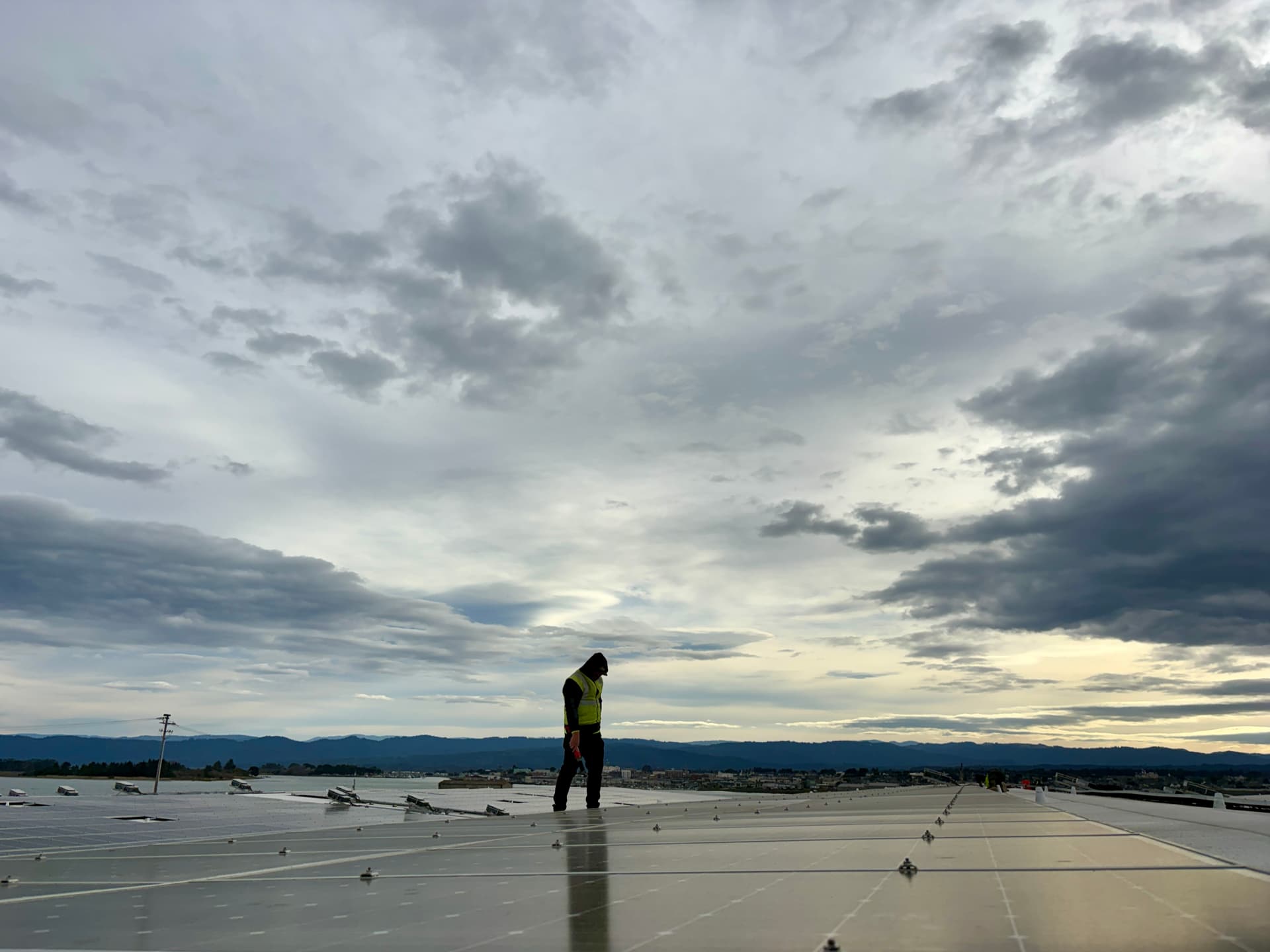
Our commercial O&M clients include national retail chains, solar operators, and healthcare organizations. These are not handshake agreements. National retail chains run formal vendor qualification processes. We passed.
RCH commercial track record
148 commercial jobs across Southern California and the Central Valley. O&M contracts with national retail chains. Multi-megawatt site work as a service subcontractor to a national solar operator. C-10 licensed.
9.8MW
Largest site we've serviced
Statewide
O&M coverage across California
148
Commercial jobs completed
When your O&M provider has disappeared, the process starts with a paid site assessment: $175 truck roll plus $200 per hour per technician, two-tech minimum. You get a written condition report, production baseline against original design, and a list of deferred maintenance. Service scope is built from the assessment findings. Assessment cost is credited toward any O&M contract signed within 30 days.
For full detail on what our commercial O&M contracts include, see our commercial solar O&M services page. For companies considering a new system alongside an O&M agreement, see commercial solar installation.
A healthy commercial solar system runs at 75% to 85% performance ratio. If yours has dropped below 70% with no active O&M provider, a site assessment will tell you why.
Commercial solar O&M, the questions we hear most
Will you just try to sell me a new system?
No. We are an O&M contractor. Our business is keeping your existing system healthy, not selling new installs. We do not have a sales quota driving our site assessments. If assessment finds a failed component under manufacturer warranty, we help you file the claim rather than pitch a replacement.
How do I know you won't disappear too?
Check our CSLB license (#1108682), ask for references from existing O&M clients, and look at how long we have been operating in North County. We are owner-operated and will provide client references on request.
What does the transition process look like?
It starts with a paid site assessment: $175 truck roll plus $200 per hour per technician, two-tech minimum. You get a written condition report, a production baseline against original design, and a list of deferred maintenance. Service scope is built from that report. Assessment cost is credited toward any O&M contract signed within 30 days.
Can you work on our equipment?
Yes. If it's a commercial solar system, we can work on it. That includes SolarEdge, Enphase, SMA, Fronius, SunPower, and equipment whose manufacturer no longer exists. If you are not sure what inverters your system uses, the site assessment will document it.
What does O&M actually include?
Full scope is on our commercial solar O&M services page. Short version: monitoring with client portal access you control, planned annual maintenance including IV curve tracing and thermography, unplanned repairs, warranty claim coordination, and monthly KPI reports with uptime percentage, performance ratio, and open tickets.
Need an O&M assessment on your commercial system?
Start with a paid site assessment: $175 truck roll plus $200/hr per tech, two-tech minimum. Includes full system inspection, performance review against original design, and a written findings report. Assessment cost is credited toward any O&M contract signed within 30 days.
Last updated: May 2026